 EN
EN
Introduction
In the high-stakes environment of chemical processing, the choice between a traditional mechanical seal centrifugal pump and a modern sealless magnetic drive pump is a critical decision for plant managers. While mechanical seal pumps have been the industry workhorse for decades, the inherent risk of seal failure—resulting in hazardous leaks, environmental fines, and costly downtime—is driving a shift toward magnetic drive technology. This article provides a comprehensive cost-benefit analysis for chemical plants, evaluating the Total Cost of Ownership (TCO) beyond the initial purchase price. As a leading manufacturer, Haoquan Pump has helped numerous facilities transition to sealless solutions, significantly improving both safety and profitability.
Section 1: Industry Standards and Technical Data
Chemical plants operate under stringent safety regulations such as OSHA in the US or ATEX/CE directives in Europe. Mechanical seals are traditionally the weakest link in a pump system, accounting for up to 70% of pump-related failures.
* Mechanical Seal Pump: Relies on two flat faces rubbing against each other to prevent leakage. This requires a "seal flush" system to cool and lubricate the faces, adding complexity and utility costs (water/power).
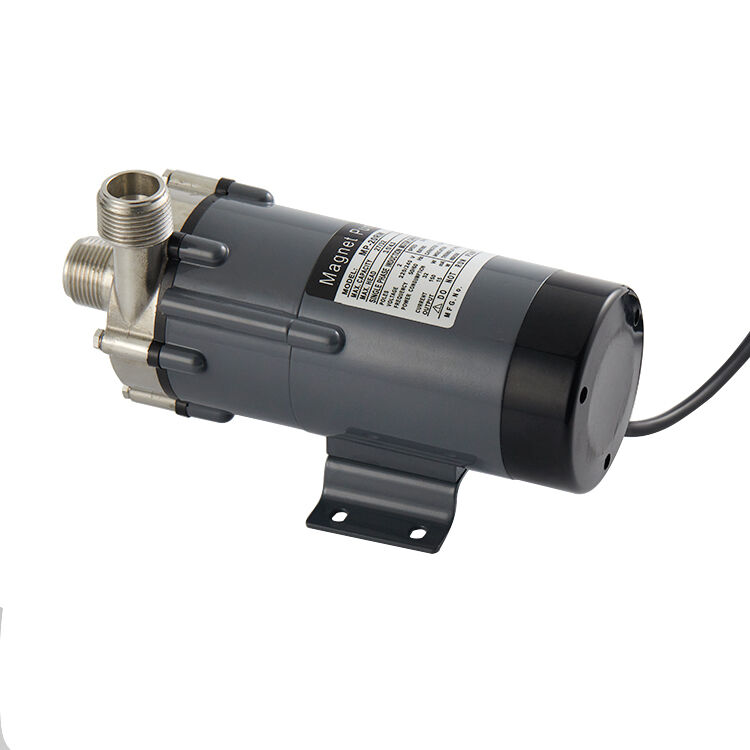
* Magnetic Drive Pump: Uses a static containment shell to create a hermetic seal. There are no rotating seals to wear out. Technical data shows that magnetic couplings can transmit up to 500 Nm of torque in high-end industrial models, making them suitable for heavy-duty chemical transfer.
From a technical standpoint, the lack of a dynamic seal in Haoquan’s magnetic pumps eliminates the need for expensive seal monitoring systems, aligning with ISO 14001 environmental management standards by preventing volatile organic compound (VOC) emissions.
Section 2: Manufacturing Capabilities and Material Science
The ability of a pump to survive a chemical environment depends on its materials. At Haoquan Pump, we utilize advanced manufacturing techniques to produce wetted components that can withstand the most aggressive media.
* Material Selection: We offer pumps in PVDF (Polyvinylidene Fluoride) for its superior chemical resistance to acids and bromines, and Stainless Steel (SS316L) for solvents and high-temperature organic liquids.
* Magnet Integrity: Our "Haoquan" brand utilizes high-grade rare-earth magnets (NdFeB or SmCo). SmCo is particularly valued in chemical plants for its ability to maintain magnetic strength even when process temperatures fluctuate wildly, preventing "de-coupling" events.
* Precision Engineering: Our injection molding processes for plastic-lined pumps ensure uniform wall thickness in the containment shell, which is vital for balancing pressure resistance with magnetic efficiency (minimizing eddy current losses).
Section 3: Comparative Analysis (Cost-Benefit Table)
When calculating the ROI, chemical plants must look at a 5-year or 10-year horizon. The following table highlights the financial and operational differences.
Cost/Feature Factor |
Mechanical Seal Pump |
Haoquan Magnetic Drive Pump |
**Initial Purchase Price** |
Lower |
Moderate to High |
**Installation Cost** |
High (Requires seal flush piping) |
Lower (Simple "plug-and-play") |
**Annual Maintenance** |
High (Seal replacement every 12-18 months) |
Low (Bushing check every 2-3 years) |
**Utility Consumption** |
Higher (Flush water/cooling needed) |
Lower (Process fluid self-lubricating) |
**Environmental Risk** |
Risk of leak/VOC emissions |
Zero Leakage (Hermetically sealed) |
**Downtime Costs** |
Frequent (Seal failures) |
Minimal (Higher MTBF) |
MTBF: Mean Time Between Failures
Section 4: Maintenance and Quality Assurance
Maintenance in a chemical plant must be fast and reliable. For mechanical seal pumps, replacing a seal often requires a complete pump teardown and precise alignment. In contrast, Haoquan’s magnetic drive pumps are designed for "back pull-out" maintenance.
* Wear Parts: The only true wear parts in a mag-drive pump are the internal bushings and thrust washers. Our use of Silicon Carbide (SiC) or high-grade Carbon ensures these components last significantly longer than traditional seal faces.
* Quality Assurance: Every Haoquan pump undergoes a rigorous QC process, including 1.5x working pressure testing and dynamic balancing of the magnetic rotor. This ensures that when the pump is installed in a chemical line, it operates with minimal vibration—the leading cause of bearing wear.
Conclusion & CTA
While the initial investment in a magnetic drive pump may be higher than a mechanical seal pump, the long-term savings in maintenance, environmental compliance, and avoided downtime make it the superior choice for chemical plants. By eliminating the seal, you eliminate the risk.
Maximize your plant's uptime today.
Haoquan Pump offers a wide range of sealless solutions tailored for the chemical industry. Contact our technical sales team for a TCO analysis of your current pumping systems and see how much you can save. Explore our product range at [www.cnhqpump.com](http://www.cnhqpump.com) or reach out directly to [email protected]. Let’s build a leak-free future together.