
 EN
EN
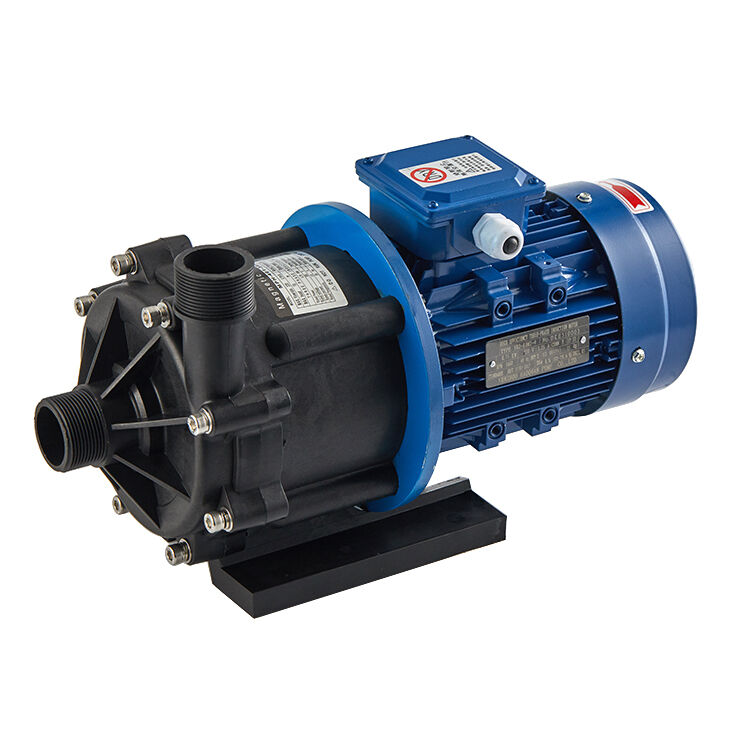
Introduction: The Intelligence Surge in Pumping Systems
For decades, industrial pump maintenance was characterized by two primary methods: "run-to-fail" (reactive) or "calendar-based" (preventative). Both methods are inherently inefficient. Reactive maintenance leads to costly unplanned downtime, while preventative maintenance often results in replacing perfectly good parts prematurely.
As we enter the era of Industry 4.0, the integration of the Internet of Things (IoT) and smart sensors is fundamentally changing the game. Pumping systems are no longer "dumb" mechanical assets; they are becoming intelligent, data-generating nodes in a connected factory. Wenzhou Haoquan Pump Co., Ltd. is embracing this transformation, offering pump solutions that are ready for the next generation of smart maintenance strategies.
1. From Reactive to Predictive: The Power of Data
The core of the IoT revolution is the transition to Predictive Maintenance (PdM). By constantly monitoring the health of a pump, facility managers can predict when a failure is likely to occur and schedule repairs at the most convenient time.
This shift is powered by real-time data. Instead of guessing the condition of a magnetic drive pump or a diaphragm pump, sensors provide an objective "medical report" of the equipment's internal state. This reduces downtime by up to 30-50% and extends the overall service life of the pump assets.
2. Key Sensors Driving Smart Pump Monitoring
To transform a standard pump into a smart asset, several types of sensors are typically deployed. These sensors detect "signatures" of common pump problems like cavitation, bearing wear, or seal failure.
Sensor Type |
Parameters Monitored |
Problems Detected |
Vibration Sensors |
Frequency, Amplitude |
Misalignment, bearing failure, imbalance |
Temperature Sensors |
Casing & Bearing Temp |
Overheating, dry running, friction issues |
Pressure Transducers |
Inlet/Outlet Pressure |
Blockages, impeller wear, cavitation |
Flow Meters |
Volumetric Flow Rate |
System leaks, reduced efficiency, clogging |
Current/Power Sensors |
Motor Load, Voltage |
Electrical faults, dry running, motor strain |
3. IoT Connectivity: Closing the Loop
Sensors alone are just the beginning. The "Internet" in IoT comes into play when these sensors transmit data to a centralized platform—either on-premise or in the cloud.
- Edge Computing: Modern smart pumps often include local processing units that can trigger an immediate emergency shut-down if critical thresholds are exceeded (e.g., a sudden temperature spike in a magnetic pump).
- Remote Monitoring: Plant managers can monitor the status of pumps across multiple sites from a single dashboard on their smartphone or tablet.
- AI and Machine Learning: Over time, AI algorithms analyze historical data to identify subtle patterns that precede a failure, refining the accuracy of predictive alerts.
4. Why Smart Pumping Matters for B2B Operations
For B2B buyers, the "smart" feature set of a pump is a critical factor in lowering the Total Cost of Ownership (TCO).
- Reduced Labor Costs: Technicians no longer need to perform manual inspections on every pump. They are only deployed when the system flags an issue.
- Spare Parts Optimization: By knowing exactly which part is failing, companies can maintain a "just-in-time" inventory of spares like diaphragms, O-rings, or magnets, rather than stocking massive quantities of every possible part.
- Energy Optimization: IoT systems can identify if a pump is operating far from its Best Efficiency Point (BEP) and suggest adjustments to the VFD settings to save electricity.
5. Haoquan Pump’s Vision for a Connected Future
At Wenzhou Haoquan Pump Co., Ltd., our R&D team is focused on making our pumps "IoT-ready." Whether it is a dosing pump for water treatment or a magnetic pump for chemical processing, we ensure our designs allow for easy integration of standard industrial sensors and communication protocols (such as Modbus or IO-Link).
Our commitment to quality means that our mechanical components are robust enough to withstand the rigors of industrial use, while our design philosophy remains flexible enough to adapt to the digital needs of our global customers.
Conclusion: Investing in Intelligence
The future of industrial pumping is connected, transparent, and predictive. By integrating smart sensors and IoT into your maintenance strategy, you move from a position of uncertainty to a position of control. Wenzhou Haoquan Pump is your partner in this digital journey, providing the reliable hardware that serves as the foundation for your smart factory.
Empower Your Facility with Smart Pumping
Explore our range of high-performance industrial pumps and discuss smart integration options with our engineering team.
[Visit www.cnhqpump.com](https://www.cnhqpump.com) to see how we are engineering the future of pumping.
Table of Contents
- Introduction: The Intelligence Surge in Pumping Systems
- 1. From Reactive to Predictive: The Power of Data
- 2. Key Sensors Driving Smart Pump Monitoring
- 3. IoT Connectivity: Closing the Loop
- 4. Why Smart Pumping Matters for B2B Operations
- 5. Haoquan Pump’s Vision for a Connected Future
- Conclusion: Investing in Intelligence