
 EN
EN
Choosing the right cooling pump for your industrial or commercial application is one of the most consequential purchasing decisions you will make heading into 2026. The market is flooded with options spanning magnetic drive designs, centrifugal configurations, corrosion-resistant housings, and high-flow variants, each suited to a distinct set of operating conditions. Buyers who approach this decision without a clear framework risk costly mismatches between pump performance and system demands, leading to premature failures, inefficient heat transfer, and unplanned downtime that quickly erodes return on investment.
This expert buyer's guide was developed to cut through the confusion. Whether you are outfitting a new manufacturing line, replacing aging equipment, or scaling up a cooling system to match expanded production capacity, understanding the key selection criteria for a cooling pump will save you time, money, and operational headaches. We examine design categories, critical performance parameters, material considerations, energy efficiency standards, and the specific scenarios where particular models deliver outstanding value in 2026 and beyond.
Understanding Cooling Pump Categories and Design Principles
Centrifugal vs. Magnetic Drive Cooling Pumps
The two dominant design architectures you will encounter when sourcing a cooling pump today are centrifugal and magnetic drive configurations. Centrifugal models rely on an impeller rotating at high speed to impart kinetic energy to the fluid, converting velocity into pressure as the medium passes through the volute. They are well-established, cost-effective, and available in a wide range of flow rates, making them a default choice for many general cooling circuits.
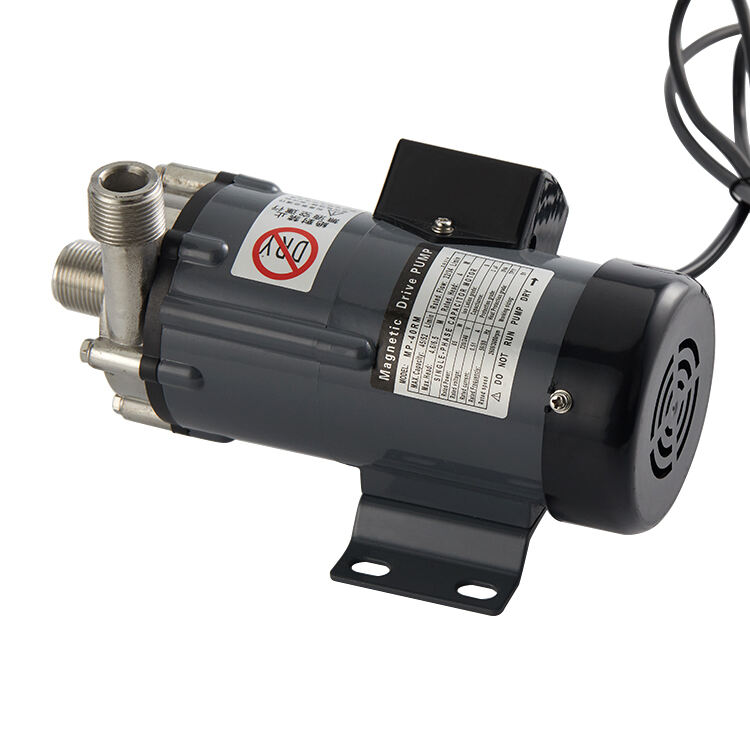
Magnetic drive pumps, by contrast, eliminate the mechanical shaft seal entirely. Instead, they use a set of permanent magnets to transmit torque through the pump housing wall to an inner magnet coupled to the impeller. This sealless construction means zero leakage at the drive end, which is especially critical when the cooling medium is chemically aggressive, flammable, or temperature-sensitive. For facilities handling acids, alkalis, or specialty coolants, a sealless magnetic drive cooling pump is often the safest and most maintenance-efficient long-term choice.
The selection between these two architectures depends heavily on your fluid characteristics and regulatory environment. Centrifugal models excel in high-volume, low-hazard water cooling circuits, while magnetic drive designs justify their higher initial cost through reduced seal replacement intervals and compliance with leak-prevention standards in process industries.
Inline, Submersible, and Circulation Cooling Pump Variants
Beyond the drive mechanism, buyers must also choose between inline, submersible, and dedicated circulation designs. An inline cooling pump mounts directly in the pipe run, keeping the installation footprint minimal and the maintenance access straightforward. These are widely used in HVAC chiller loops, machine tool coolant systems, and process water circuits where space is at a premium.
Submersible variants are designed to operate while fully immersed in the fluid, which offers natural thermal management of the motor and simplifies tank-based cooling setups. Dedicated circulation cooling pump models, such as those used in high-power laser cooling, battery thermal management, and semiconductor fabrication, are engineered specifically to maintain precise flow rates and pressure profiles in closed-loop systems. Understanding which configuration aligns with your system architecture is the first step toward building a reliable, efficient cooling circuit.
Key Performance Parameters Every Buyer Must Evaluate
Flow Rate, Head Pressure, and System Curve Matching
Flow rate and head pressure are the two most fundamental performance metrics when specifying a cooling pump. Flow rate, typically expressed in liters per minute or gallons per minute, determines how much heat the pump can transfer per unit time when combined with the fluid's heat capacity. Head pressure, expressed in meters or PSI, quantifies the pump's ability to overcome the resistance of the piping system, including pipe friction, elevation changes, and component pressure drops.
A common and expensive mistake is selecting a cooling pump based solely on its maximum rated flow without plotting the pump's performance curve against the actual system resistance curve. The operating point, where these two curves intersect, determines the real-world flow and pressure the pump will deliver. If these curves are not matched carefully, the pump may operate far from its best efficiency point, resulting in excessive energy consumption, cavitation risk, and accelerated wear.
For applications requiring variable flow, such as dynamic cooling loads in manufacturing or data center cooling loops, consider pumps rated for wide operating ranges or systems equipped with variable frequency drives. A high-performance cooling pump with broad curve flexibility gives operators the ability to adjust flow dynamically without replacing the pump as system demands evolve.
Temperature Range and Thermal Stability
Every cooling pump specification sheet will list a maximum continuous operating temperature, but the real question is how the pump performs across the full thermal range it will experience in service. Industrial cooling circuits routinely swing from near-ambient temperatures during startup to sustained elevated temperatures once production loads are established. Materials that exhibit excellent mechanical strength at room temperature may soften, swell, or degrade when exposed to high-temperature coolants over extended periods.
Pay close attention to the temperature ratings of all wetted materials, including the impeller, casing, shaft (where present), and any O-ring or static seal components. For high-temperature coolant circuits, PEEK, PTFE, or ceramic-coated internal components are preferred over standard thermoplastic constructions. A cooling pump that maintains consistent performance across wide temperature swings contributes directly to system stability and process quality.
Material Selection and Chemical Compatibility
Why Corrosion Resistance Defines Long-Term Value
In industrial environments where cooling fluids include glycol-water mixtures, dilute acids, alkali solutions, or specialty chemical coolants, material compatibility is not a secondary concern — it is the primary criterion for model selection. A cooling pump built from incompatible materials will suffer accelerated corrosion, pitting, and seal degradation that leads to failure within months under aggressive chemical service.
Polypropylene, PVDF (polyvinylidene fluoride), and reinforced engineering polymers have largely displaced cast iron and stainless steel in chemically demanding cooling circuits because they offer broad chemical resistance at manageable cost. For extreme acid or alkali exposure, PTFE-lined pump interiors provide an additional barrier. The best models for 2026 combine these advanced polymer constructions with the sealless magnetic drive architecture mentioned earlier, delivering a cooling pump that resists both chemical attack and fluid leakage simultaneously.
Buyers sourcing pumps for electroplating lines, battery manufacturing, semiconductor wet processes, or chemical production cooling circuits should insist on full chemical compatibility charts from their supplier, covering every material in contact with the process fluid. A pump that is the right size and pressure rating but made from incompatible materials is simply the wrong pump, regardless of price.
Acid and Alkali Resistant Designs for Process Cooling
Dedicated acid and alkali resistant cooling pump designs represent one of the fastest-growing segments of the industrial pump market, driven by expansion in battery cell manufacturing, chemical processing, and advanced materials production. These applications require not just material resistance but dimensional stability under thermal cycling, since repeated expansion and contraction of pump components can create micro-gaps that allow chemical ingress even in materials that are nominally resistant.
Leading models in this category, including the MP-70RM series magnetic circulation drive pumps, are engineered to handle flow rates in the 86 to 97 liter per minute range with high-power motor configurations specifically sized for demanding cooling circuits. The combination of big-power performance and corrosion-resistant construction makes these pumps effective across a broad range of process cooling scenarios where both flow volume and chemical durability are non-negotiable.
When comparing acid and alkali resistant cooling pump options, also evaluate the pump's resistance to abrasion. Many process coolants carry suspended particulates from etching, plating, or reaction byproducts, and a pump designed only for chemical resistance without adequate hardness in the impeller and casing will suffer rapid wear under particle-laden flow conditions.
Energy Efficiency and Total Cost of Ownership
Efficiency Ratings and Power Consumption Benchmarks
Energy consumption is a major ongoing cost for any cooling pump in continuous industrial service. A pump running 24 hours a day, seven days a week, accumulates thousands of operating hours per year, and even a modest improvement in hydraulic efficiency translates directly into meaningful electricity cost savings over the pump's service life. In 2026, buyers are increasingly scrutinizing pump efficiency curves rather than just nameplate power ratings when making purchase decisions.
The hydraulic efficiency of a cooling pump describes how effectively it converts electrical input power into useful fluid power (flow multiplied by pressure). High-efficiency impeller geometries, tight clearances between rotating and stationary components, and optimized volute designs all contribute to improved hydraulic efficiency. When comparing models, look for efficiency ratings at or near your expected operating point, not just at the pump's best efficiency point under laboratory conditions.
Total cost of ownership for a cooling pump must account for initial purchase price, installation costs, energy consumption over the expected service life, maintenance intervals and part costs, and downtime costs associated with any failures. A slightly higher-priced pump with superior efficiency and longer service intervals will typically deliver lower total cost of ownership than a budget option that demands frequent maintenance and consumes more electricity across the same operating period.
Maintenance Intervals and Sealless Advantages
Mechanical seal replacement is consistently cited as the highest-frequency maintenance task associated with traditional shaft-sealed cooling pump designs. In aggressive chemical service or high-cycle applications, shaft seals may require inspection and replacement every 2,000 to 4,000 operating hours, adding up to significant maintenance labor and parts expense over a pump's operational life. Each seal replacement also introduces the risk of installation error, fluid contamination, or minor leakage that can affect product quality in sensitive processes.
Sealless magnetic drive cooling pump models eliminate this maintenance requirement entirely. With no mechanical seal to wear or fail, these pumps can operate for extended periods without seal-related intervention, significantly reducing the total maintenance burden on engineering and facilities teams. The trade-off is a somewhat higher initial cost and greater sensitivity to dry-running conditions, which can overheat and damage the containment shell and inner magnet if the pump runs without fluid. Proper installation safeguards, including low-flow protection and dry-run detection sensors, mitigate this risk effectively in well-designed systems.
Application Matching and Buyer Scenarios
Selecting the Right Cooling Pump for High-Flow Industrial Circuits
High-flow industrial cooling circuits, such as those supporting large CNC machining centers, industrial laser systems, or process reactors, demand a cooling pump that can sustain elevated flow rates continuously without performance degradation. In these applications, the pump operates as the backbone of a heat extraction system where any flow reduction directly compromises thermal control and product quality.
For these high-demand scenarios, buyers should prioritize pumps with robust motor ratings, generous impeller diameters, and casings designed to minimize turbulence losses at high velocity. Big-power cooling pump models in the 80-plus liter per minute flow range are specifically engineered for these continuous-duty circuits, providing the hydraulic muscle to maintain target cooling capacity even as system pressure drops increase with scale or system aging.
Buyers in this segment should also evaluate inlet conditions carefully. Pumps operating at high flow rates are particularly sensitive to inlet cavitation, which occurs when local pressure at the impeller eye drops below the fluid's vapor pressure. Ensuring adequate net positive suction head available (NPSHA) at the pump inlet, and comparing it against the pump's required NPSH, is a non-negotiable step before finalizing a cooling pump selection for high-flow service.
Compact and Versatile Models for Tight-Space Applications
Not every cooling application demands a large-frame industrial pump. Many manufacturing processes, laboratory setups, and custom equipment builds require a compact cooling pump that fits within constrained enclosures while still delivering reliable flow and pressure. In these cases, the physical envelope of the pump is as important as its hydraulic performance.
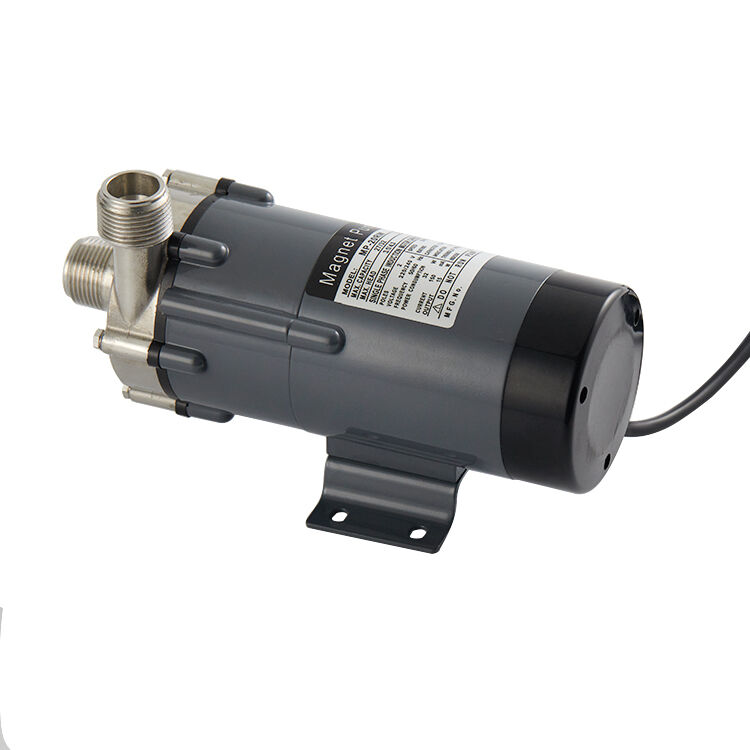
Compact magnetic drive circulation pumps have become the preferred choice for tight-space applications because their sealless construction allows a shorter axial length compared to equivalent shaft-sealed models, and their smooth outer housings simplify bracket mounting in confined equipment bays. When specifying a compact cooling pump for embedded equipment applications, verify that the motor ventilation requirements are compatible with the enclosure's thermal management design, since inadequate motor cooling in a sealed cabinet is a common cause of premature pump motor failure.
Versatility across fluid types is another advantage of modern compact cooling pump designs built from advanced polymer materials. A single pump platform that handles water, glycol-water mixtures, dilute acids, and light chemical solutions without material changes gives equipment designers the flexibility to use one pump model across multiple product lines, reducing spare parts inventory and simplifying maintenance training.
FAQ
What is the most important factor when choosing a cooling pump for chemical service?
Chemical compatibility of all wetted materials is the most critical factor. A cooling pump used with acids, alkalis, or specialty chemicals must have its impeller, casing, and any internal components rated for the specific fluid being handled. Selecting a sealless magnetic drive design additionally eliminates the shaft seal as a potential leak point, which is essential in hazardous chemical environments. Always request a full chemical resistance chart for every material in the fluid path before finalizing your selection.
How do I know if a cooling pump is correctly sized for my system?
Correct sizing requires plotting the pump's performance curve against your system resistance curve and confirming that the intersection point, the actual operating point, falls within the pump's preferred operating range and near its best efficiency point. Using a cooling pump that operates far from its best efficiency point causes excess energy consumption, vibration, and accelerated wear. If your cooling load varies significantly, consider a pump designed for a wide operating range or pair the pump with a variable frequency drive to maintain efficiency across load swings.
What are the advantages of a magnetic drive cooling pump over a sealed pump?
A magnetic drive cooling pump eliminates the mechanical shaft seal, which is the most common failure point in traditional pump designs. This delivers zero-leakage operation, reduced maintenance intervals, and compliance with strict environmental and safety regulations that limit fluid emissions. The sealless design is especially valuable in pharmaceutical, chemical, and semiconductor applications where fluid containment is critical. The main consideration is protecting against dry-run conditions, which can damage the magnetic containment shell if the pump runs without fluid.
How often should a cooling pump be serviced in continuous industrial use?
Service intervals vary by pump type and application. Shaft-sealed cooling pump models typically require seal inspection every 2,000 to 4,000 operating hours depending on fluid aggressiveness and operating conditions. Magnetic drive models eliminate seal maintenance but still require periodic inspection of bearings, the containment shell, and electrical connections. Establishing a preventive maintenance schedule based on the manufacturer's recommendations and your specific operating conditions, including fluid temperature, particulate content, and duty cycle, is the most reliable way to maximize pump service life and minimize unplanned downtime.
Table of Contents
- Understanding Cooling Pump Categories and Design Principles
- Key Performance Parameters Every Buyer Must Evaluate
- Material Selection and Chemical Compatibility
- Energy Efficiency and Total Cost of Ownership
- Application Matching and Buyer Scenarios
-
FAQ
- What is the most important factor when choosing a cooling pump for chemical service?
- How do I know if a cooling pump is correctly sized for my system?
- What are the advantages of a magnetic drive cooling pump over a sealed pump?
- How often should a cooling pump be serviced in continuous industrial use?