
 EN
EN
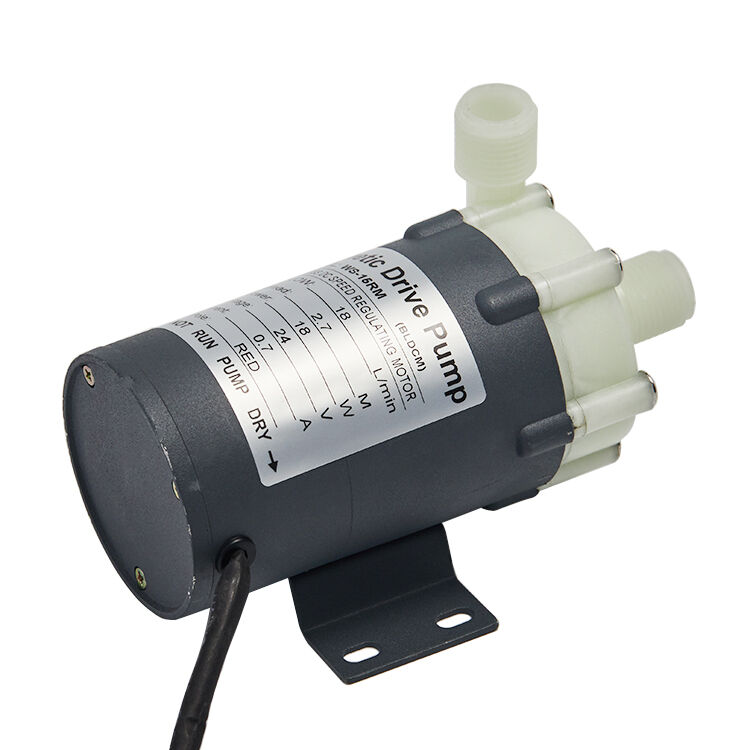
The bldc pump has emerged as one of the most technically advanced fluid-handling solutions available to engineers and procurement professionals entering 2026. Driven by brushless direct current motor technology, these pumps deliver a compelling combination of energy efficiency, precise flow control, and extended operational lifespan that traditional brushed or AC motor-driven pumps simply cannot match. As industries ranging from chemical processing and medical device manufacturing to HVAC systems and electric vehicle thermal management continue to demand smarter, more reliable fluid-handling hardware, understanding the landscape of available bldc pump models and their defining features has never been more important.
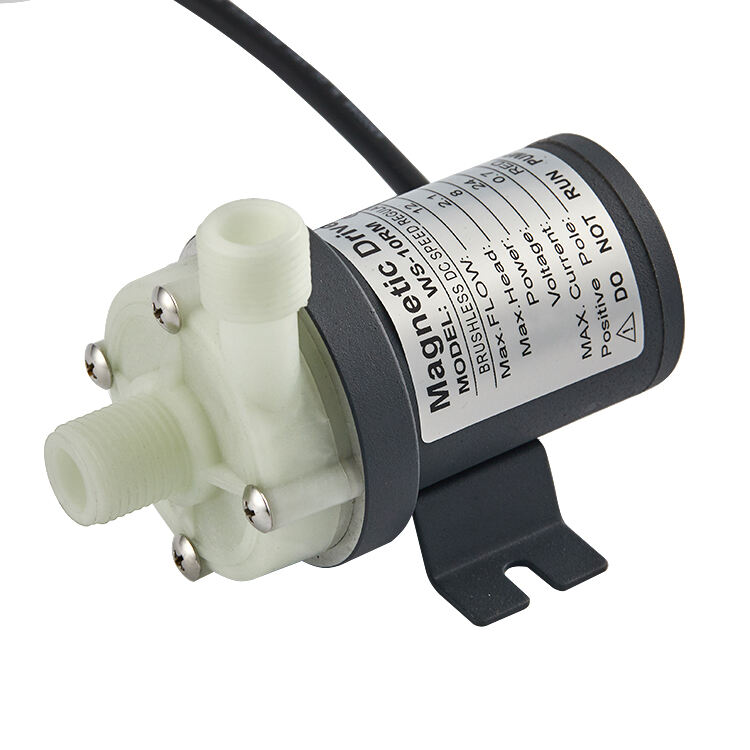
This 2026 guide is designed to give decision-makers, design engineers, and procurement teams a thorough and practical reference for evaluating a bldc pump across key performance dimensions. We will examine the core technology behind these pumps, the most relevant model categories available today, the features that differentiate premium units from entry-level options, and the application scenarios where each configuration excels. Whether you are specifying a compact micro pump for a laboratory instrument or a high-flow circulation unit for an industrial cooling loop, the information in this guide will help you make a well-informed selection for 2026 and beyond.
Understanding BLDC Pump Technology in 2026
How Brushless DC Motor Integration Redefines Pump Performance
At the heart of every bldc pump is a brushless direct current motor, a design that eliminates the mechanical carbon brushes found in conventional DC motors. This fundamental architectural difference has profound consequences for pump performance. Without brushes, there is no ongoing friction-driven wear at the commutation interface, which means the motor and pump assembly can operate for tens of thousands of hours with minimal degradation. For facilities and OEMs that depend on continuous uptime, this translates directly into reduced maintenance intervals and lower total cost of ownership over a product's service life.
The electronic commutation system used in a brushless DC motor also allows far more precise speed and torque control compared to brushed alternatives. When a bldc pump is paired with an intelligent driver circuit, operators or automated control systems can modulate flow rate in real time, responding dynamically to changing demand. This level of controllability is particularly valuable in applications such as reagent dosing, coolant circulation in battery thermal management systems, and precision dispensing in analytical instruments where volumetric accuracy is critical.
Another technology-level advantage that has become increasingly prominent in 2026 is the integration of the motor and wetted components into a magnetically coupled or fully sealed assembly. Many modern bldc pump designs use magnetic coupling to eliminate shaft seals entirely, preventing leakage paths that would otherwise be a contamination or safety risk in corrosive or high-purity fluid applications. This sealed architecture, combined with the brushless motor's inherent reliability, positions the bldc pump as a dominant choice for demanding environments.
Key Technical Specifications to Understand Before Selecting a Model
Before comparing specific bldc pump models, it is essential to understand the primary technical parameters that define performance. Flow rate, expressed in liters per minute or milliliters per minute depending on the application scale, sets the basic fluid delivery capacity. Head pressure, or the maximum pressure the pump can generate against resistance, determines whether a given model is suitable for a system with significant downstream back-pressure, such as a long pipe run or a high-resistance heat exchanger circuit.
Voltage compatibility is another central specification. The majority of bldc pump units designed for compact and mid-range industrial applications operate at 12V or 24V DC, making them compatible with widely available power supplies and easy to integrate into battery-backed or solar-powered systems. Some larger industrial bldc pump platforms operate at higher voltages, but the 12V and 24V range dominates the OEM and laboratory market segments in 2026. Operating temperature range, media compatibility, and ingress protection rating round out the key parameters that should be confirmed before finalizing a selection.
Major Model Categories in the 2026 BLDC Pump Market
Micro and Miniature BLDC Pump Models
The micro and miniature segment of the bldc pump market has seen remarkable innovation entering 2026. These compact units, often handling flow rates from a few milliliters per minute up to around 12 liters per minute, are engineered specifically for space-constrained installations and applications requiring gentle, pulsation-free fluid transfer. The WS-10RM is a representative example of this category, delivering up to 12L per minute of flow at 12V or 24V DC while maintaining an extremely compact footprint suitable for embedded system integration.
Miniature bldc pump models in this category are frequently used in laboratory analytical instruments, point-of-care diagnostic devices, inkjet system fluid management, and small-scale chemical recirculation loops. Their magnetic drive construction prevents direct contact between the motor and the pumped media, which is a critical feature when handling aggressive solvents, acids, or biological fluids. The bldc pump models in this segment typically feature wetted components manufactured from chemically resistant materials such as PVDF, PTFE-lined chambers, or ceramic bearings, enabling compatibility with a wide spectrum of aggressive media.
The controllability of miniature bldc pump units also makes them well-suited for closed-loop systems where a feedback sensor monitors temperature, pressure, or concentration and adjusts pump speed accordingly. This responsiveness is difficult or impossible to achieve with fixed-speed AC pumps or simple brushed DC pumps, and it is one of the primary reasons OEM design teams have increasingly standardized on brushless DC technology for new product generations entering 2026.
Mid-Range Industrial BLDC Pump Models
Mid-range industrial bldc pump models occupy the zone between compact micro pumps and large-scale process pumps, typically delivering flow rates from roughly 15 to 100 liters per minute with proportionally higher head pressure capabilities. These models are commonly specified for HVAC chiller systems, electric vehicle battery cooling loops, industrial equipment thermal management, and water treatment skid assemblies. Their larger motor housings accommodate more powerful brushless motors while still retaining the sealed, low-maintenance characteristics that define the bldc pump category.
A defining feature of premium mid-range bldc pump models in 2026 is the integration of onboard driver electronics with PWM or analog speed control inputs. This allows the pump to interface directly with a PLC, building management system, or vehicle CAN bus without requiring a separate external driver module. The result is a more compact control panel footprint and fewer potential failure points in the wiring harness, which are meaningful advantages in both commercial building applications and mobile equipment installations.
High-Pressure and High-Flow BLDC Pump Configurations
At the upper end of the performance envelope, high-pressure and high-flow bldc pump configurations are engineered for applications where both volumetric throughput and system pressure demands are substantial. Industrial process cooling, semiconductor fabrication water management, and large-scale solar thermal systems are among the use cases driving development in this segment. These models frequently incorporate multi-stage impeller assemblies or gear pump mechanisms driven by high-torque brushless motors, achieving pressures that previously required AC centrifugal or positive displacement pumps.
The energy efficiency advantage of the bldc pump becomes especially economically significant at this scale. Because brushless DC motors operate at higher efficiency coefficients than equivalent AC induction motors, particularly under variable-load conditions, a high-flow bldc pump installation can reduce annual electricity consumption measurably compared to a conventionally driven system. In facilities subject to energy efficiency regulations or sustainability reporting requirements, this efficiency advantage also carries compliance and reporting value beyond simple cost savings.
Standout Features Differentiating Premium BLDC Pump Models
Chemical Resistance and Material Engineering
One of the most consequential feature differences between bldc pump models in 2026 is the range of media they can safely handle. Entry-level models may use standard engineering plastics and EPDM or NBR elastomers suitable for water and mild aqueous solutions. Premium models intended for chemical duty are built with wetted components in PVDF, PFA, PTFE-lined flow paths, or ceramic-on-ceramic bearing pairs. This materials engineering allows the same fundamental bldc pump architecture to be deployed across radically different fluid environments, from deionized water in semiconductor fabrication to concentrated acids in analytical chemistry.
Selecting a bldc pump with inappropriate material compatibility is one of the most common and costly specification errors. A pump whose impeller or housing swells, cracks, or corrodes under chemical attack can contaminate the process fluid, cause sudden system failure, or create a safety hazard. Leading manufacturers in 2026 provide detailed chemical compatibility charts and, in some cases, fluid-specific model variants to eliminate ambiguity in the selection process. Procurement teams should always confirm wetted material compatibility against the full spectrum of fluids the pump may encounter, including cleaning agents used during maintenance cycles.
Integrated Control and Communication Interfaces
The communication capability built into a bldc pump model has become a primary differentiator in 2026, particularly for OEM applications and smart facility installations. Basic models accept a simple PWM signal for speed control, while more sophisticated platforms support RS-485 Modbus communication, enabling the pump to be addressed individually within a multi-device network, queried for real-time operating data, and commanded remotely from a supervisory control system. Some premium bldc pump models incorporate onboard flow sensing or temperature monitoring, reporting operational status back to the control system without requiring additional sensors in the fluid circuit.
This level of integration is particularly valuable in predictive maintenance programs. Because a fully networked bldc pump can continuously report its motor current draw, rotational speed, and temperature to a monitoring platform, anomalies that indicate developing faults can be detected and addressed before they cause unplanned downtime. The shift from reactive to predictive maintenance enabled by smart bldc pump connectivity represents a meaningful operational improvement for facilities managing large numbers of pumping points.
Noise and Vibration Performance
The acoustic and vibration profile of a bldc pump is a feature dimension that is often underweighted during specification but becomes highly consequential in the final installation. Brushless DC motors inherently produce less mechanical noise than brushed motors because there is no brush-commutator contact, and magnetic drive or fully enclosed motor designs further eliminate sound transmission paths from the motor to the pump housing. In applications such as medical imaging equipment, laboratory instruments, office HVAC units, and consumer appliances, the difference between a noisy and a quiet bldc pump can directly affect end-user satisfaction and product review scores.
Premium bldc pump models in 2026 are engineered with hydraulic geometries that minimize cavitation noise, balanced impellers that reduce vibration at all operating speeds, and motor commutation algorithms tuned to minimize electrical harmonic content. Some models publish tested acoustic emission data at defined operating points, making it possible to specify noise compliance objectively rather than relying on subjective descriptions. For OEMs designing products with strict noise specifications, this data-backed approach to acoustic engineering is an important selection criterion.
Application Scenarios and Matching Strategy for 2026
Thermal Management in Electric Vehicles and Electronics
The electric vehicle and electronics cooling markets represent two of the fastest-growing demand segments for the bldc pump in 2026. In electric vehicle battery thermal management systems, a compact bldc pump circulates a water-glycol mixture or dielectric coolant through the battery pack, motor, and power electronics to maintain optimal operating temperatures and extend component life. The controllability of the bldc pump is essential here, as the cooling demand varies enormously between idle, moderate driving, and high-performance operating modes.
For electronics cooling applications in data centers, high-performance workstations, and power conversion equipment, the bldc pump drives liquid cooling loops that dissipate heat far more effectively than air-based systems. The combination of low noise, precise flow modulation, and long operational life makes a well-selected bldc pump the default choice for next-generation liquid cooling architectures entering 2026.
Chemical and Analytical Fluid Handling
Chemical processing and analytical instrumentation represent application environments where the media compatibility, leak-free construction, and precise flow control of a bldc pump are simultaneously critical requirements. In inline dilution systems, reagent recirculation loops, and solvent delivery circuits, the pump must handle fluids that are corrosive, volatile, or both, without introducing contamination or suffering degradation. Magnetically coupled bldc pump models with PVDF or PTFE wetted components are the standard solution in these contexts.
Analytical instruments such as high-performance liquid chromatography systems, automated titrators, and water quality analyzers depend on micro bldc pump units capable of delivering consistent, pulsation-minimized flow at precisely controlled rates. Any variability in flow rate introduces error into the analytical result, which is why the electronic speed control precision inherent to brushless DC motor technology is such a valued attribute in this application domain.
FAQ
What voltage options are available for a bldc pump used in industrial applications?
The majority of compact and mid-range industrial bldc pump models are designed to operate at 12V or 24V DC, which aligns with widely available power supply standards and makes integration into battery-backed or solar-powered systems straightforward. Some larger bldc pump platforms support 48V DC or higher voltages to accommodate greater power delivery requirements. When specifying a bldc pump for a new installation, confirming that the available supply voltage matches the pump's rated input range is an essential early step to avoid compatibility issues.
How does a magnetic drive bldc pump prevent chemical contamination?
A magnetically coupled bldc pump uses a pair of magnets separated by a static containment shell to transmit torque from the motor to the impeller without any physical shaft penetration through the pump housing. This sealed arrangement eliminates the dynamic shaft seal that would otherwise represent both a leakage risk and a potential contamination path. Because there is no mechanical contact between the motor side and the wetted fluid side, corrosive or high-purity fluids remain fully isolated from motor components, preventing both fluid contamination and motor damage.
Can a bldc pump be used for continuous duty operation without overheating?
Yes, the vast majority of industrial-grade bldc pump models are rated for continuous duty operation, which is one of their principal advantages over brushed DC pumps that may require duty cycling to manage brush and commutator wear heat. The brushless motor's higher efficiency means less energy is wasted as heat within the motor winding, and the absence of brush friction eliminates a secondary heat source. However, it remains important to verify that the specific bldc pump model selected carries a continuous duty rating at the intended operating point, and that the installation provides adequate thermal dissipation, particularly in enclosed enclosures with limited airflow.
What maintenance does a bldc pump require over its service life?
One of the most practical benefits of a bldc pump is its minimal maintenance requirement compared to mechanically sealed or brush-driven alternatives. There are no carbon brushes to inspect or replace, and magnetically coupled models eliminate the dynamic shaft seal that would otherwise require periodic replacement. Routine maintenance typically involves monitoring for changes in flow rate or noise that might indicate wear in bearing components, periodically checking fluid connections for integrity, and ensuring that the pump strainer or inlet filter remains clean to prevent cavitation from restricted flow. For most applications, a well-selected bldc pump will operate for several years without requiring any internal component replacement.