
 EN
EN
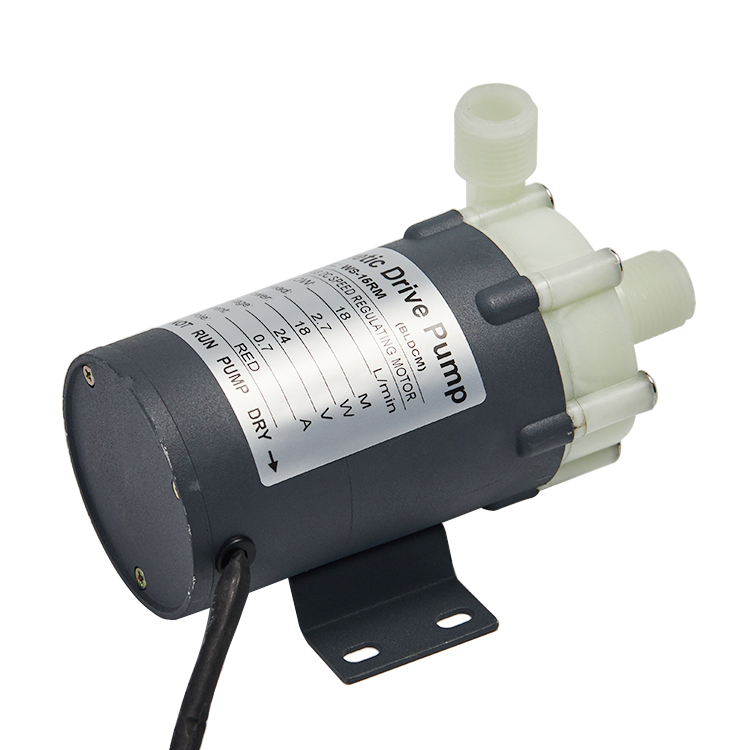
Across manufacturing floors, medical laboratories, agricultural fields, and smart homes, a quiet but powerful transformation is underway. The bldc pump — short for brushless direct current pump — is redefining what engineers and procurement managers expect from fluid handling systems. Where traditional brushed motor pumps once dominated, the bldc pump is now setting a new benchmark for energy efficiency, durability, and intelligent control.
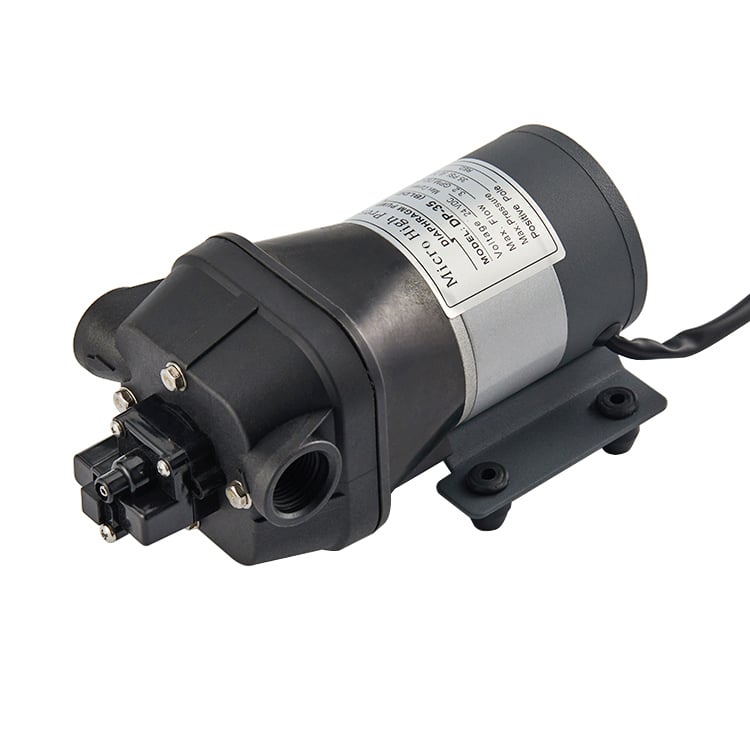
The revolution driven by bldc pump technology is not merely incremental — it represents a fundamental rethinking of how motors and pumps interact, how energy is consumed, and how systems are controlled. From compact diaphragm configurations designed for portable devices to high-pressure booster units handling demanding industrial tasks, the bldc pump has proven its versatility across an extraordinary range of applications. Understanding how this technology works and why it is gaining such rapid adoption is essential for any engineer, buyer, or product designer working in fluid management today.
The Core Technology Behind a BLDC Pump
How Brushless DC Motor Principles Apply to Pump Design
A bldc pump integrates a brushless direct current motor with a pumping mechanism — most commonly a diaphragm, centrifugal impeller, or gear-type head. Unlike traditional brushed motors, which rely on physical carbon brushes to transfer current to the rotating armature, a brushless motor uses electronic commutation. Sensors or sensorless algorithms detect the rotor position and switch current through the stator windings at precisely the right moment, generating smooth, continuous rotation without mechanical contact.
This architectural difference is the root cause of most performance advantages that a bldc pump offers. Without brushes, there is no friction-related wear on the commutation interface, no carbon dust contamination, and no intermittent electrical sparking. The result is a motor that can sustain consistent output power across a much longer service life than any brush-based equivalent. For industries where downtime is expensive and maintenance windows are limited, this matters enormously.
Electronic commutation also enables precise speed control. A bldc pump can be driven at variable speeds using pulse-width modulation or dedicated motor driver ICs, allowing engineers to tune flow rate and pressure to exact operational requirements. This granular controllability is a feature that older pump technologies simply cannot match without adding complex and expensive mechanical throttling systems.
Diaphragm and Booster Configurations in BLDC Pumps
Within the bldc pump category, diaphragm pumps are among the most widely deployed. In this configuration, the brushless motor drives an eccentric mechanism that flexes a diaphragm back and forth, creating alternating pressure and vacuum to draw fluid in and expel it through check valves. This design is self-priming, can run dry without immediate damage, and handles slightly viscous or particle-laden fluids with relative ease.
Booster-type bldc pump designs, on the other hand, are engineered to raise the pressure of an existing water supply — a critical function in residential water systems, reverse osmosis filtration units, and light industrial rinsing stations. These pumps accept incoming low-pressure fluid and deliver it at elevated pressure to downstream fixtures or process equipment. Combined with the variable speed capability of brushless motor technology, a booster bldc pump can modulate pressure delivery in real time, responding to demand changes without the pressure surges common in fixed-speed systems.
Both configurations benefit equally from the brushless motor's low electromagnetic interference profile. In sensitive environments such as medical devices, laboratory instruments, or food processing facilities, the reduced electrical noise of a bldc pump is not merely a convenience — it is a compliance requirement that enables the technology to operate alongside precision electronics without disruption.
Energy Efficiency as a Revolution Driver
Why BLDC Pumps Deliver Superior Energy Performance
Energy consumption is one of the most scrutinized metrics in industrial procurement, and the bldc pump excels here in ways that are difficult to overstate. Brushless DC motors typically achieve efficiency ratings between 85% and 95%, compared to 60%–75% for equivalent brushed DC motors and even lower figures for some AC induction alternatives at partial load. For a pump running continuously or in duty-cycle operations, this efficiency gap translates directly into measurable electricity savings over months and years of operation.
The efficiency advantage of a bldc pump is not just a function of reduced motor friction. The electronic commutation system continuously optimizes the timing of current switching based on actual rotor position, ensuring that torque generation is always aligned with the mechanical phase of rotation. This eliminates the wasted electrical energy that occurs in brushed systems where current is sometimes applied in a configuration that creates braking rather than driving torque.
Variable speed operation amplifies the energy advantage further. When a bldc pump runs at reduced speed to meet lower flow demand, its power consumption drops more than proportionally — following the affinity laws of fluid dynamics, where pump power scales with the cube of speed. A system running at 70% of full speed may consume only about 34% of full-speed power. For facilities optimizing energy use under sustainability mandates or rising utility costs, the bldc pump is increasingly a preferred specification.
Thermal Management and Long-Term Operational Economy
Heat generation is a major driver of energy waste and component degradation in any motor-driven system. The bldc pump generates significantly less heat per unit of output compared to brushed alternatives, for two compounding reasons. First, the absence of brush friction eliminates that direct thermal input. Second, the higher electrical efficiency means that a smaller proportion of input power is lost as heat in the motor windings. Less heat means less thermal stress on winding insulation, seals, bearings, and housing materials.
For system designers, the lower thermal footprint of a bldc pump simplifies thermal management architecture. In enclosed housings, portable devices, or densely packaged equipment where active cooling is impractical, using a brushless pump can eliminate the need for heat sinks or fans that would otherwise add cost, size, and potential failure points. This thermal advantage compounds the direct energy efficiency benefit into a broader economic case for adoption.
Operational economy extends to maintenance costs as well. The absence of brushes to replace, the reduced bearing wear from smoother rotation, and the lower thermal cycling experienced by internal components all contribute to longer mean time between failures. Facilities that have transitioned to bldc pump technology frequently report a significant reduction in pump-related maintenance calls, spare parts inventory, and unplanned downtime incidents.
Industries Being Transformed by BLDC Pump Technology
Water Treatment and Filtration Systems
The water treatment industry has been one of the earliest and most enthusiastic adopters of bldc pump technology. In residential and commercial reverse osmosis systems, a bldc pump serves as the booster that drives source water through semi-permeable membranes at the pressures required for effective filtration. The precise pressure control available from a variable-speed bldc pump allows these systems to maintain consistent permeate quality regardless of feed water pressure fluctuations — a capability that fixed-speed pumps cannot provide without pressure regulation valves.
In point-of-use drinking water appliances, the compact form factor and low noise signature of a bldc pump have enabled a new generation of sleek, cabinet-mounted filtration units. These devices rely on the brushless pump's ability to operate quietly at variable flow rates, ensuring that users experience responsive water delivery without the acoustic intrusion of older pump technologies. Noise levels as low as 35 to 45 decibels are achievable with modern bldc pump designs, making them well-suited to kitchen environments.
Large-scale municipal and industrial water treatment plants are also incorporating bldc pump technology into chemical dosing systems, where accurate, repeatable flow rates are critical for maintaining correct chemical concentrations. The combination of precise speed control and long service life makes the bldc pump an operationally reliable choice for these high-consequence applications where dosing errors can affect treatment efficacy or regulatory compliance.
Medical and Laboratory Equipment
Medical and diagnostic equipment manufacturers have found the bldc pump to be an enabling technology for a new generation of portable and point-of-care devices. In applications ranging from dialysis machines and infusion systems to portable oxygen concentrators and analytical instruments, the bldc pump offers the combination of compact size, precise flow control, long service intervals, and low electromagnetic emissions that medical-grade applications demand.
Regulatory environments in medical device manufacturing require that component suppliers demonstrate consistent performance over extensive operational lifetimes. The wear-free commutation mechanism of a bldc pump supports these validation requirements in ways that brush-based pumps cannot, since brush wear introduces a time-varying performance characteristic that is difficult to predict or characterize in reliability testing. The stable, predictable long-term performance profile of a bldc pump is therefore a compliance advantage as well as a practical one.
In laboratory automation, microfluidic systems, and analytical chemistry platforms, the bldc pump supports precise reagent delivery, sample transport, and wash cycle functions. The ability to program speed profiles and respond to sensor feedback in real time makes the bldc pump an ideal actuator for closed-loop fluid control in sophisticated scientific instrumentation where reproducibility is the highest priority.
Agricultural and Horticultural Applications
Smart agriculture and precision horticulture are generating rapidly growing demand for bldc pump technology. In drip irrigation systems, nutrient dosing units, and greenhouse climate control equipment, the bldc pump delivers the kind of controllable, energy-efficient fluid movement that supports modern farming practices aimed at maximizing yield while minimizing resource consumption.
Solar-powered agricultural systems in remote or off-grid locations particularly benefit from the high efficiency of a bldc pump. When powered by photovoltaic panels, every percentage point of pump efficiency translates directly into greater water delivery per panel, reducing the number of panels needed and lowering system cost. Some bldc pump designs are specifically optimized for direct DC input from solar arrays, with built-in maximum power point tracking compatibility that further optimizes energy harvest.
The durability and low maintenance demands of a bldc pump are equally important in agricultural settings, where pump installations may be distant from service infrastructure and exposed to environmental stresses including dust, moisture, and temperature extremes. Modern bldc pump units with IP65 or higher ingress protection ratings are designed to withstand these conditions while maintaining reliable operation across growing seasons without requiring service visits.
Integration with Smart Systems and IoT Platforms
Variable Speed Control and Programmable Operation
One of the most transformative capabilities of a bldc pump in modern industrial and commercial systems is its native compatibility with digital control architectures. Because the brushless motor's speed is determined electronically, a bldc pump can be driven by microcontrollers, PLCs, or dedicated motor driver boards that receive commands from higher-level supervisory systems. This enables pump operation to be integrated into broader automation workflows rather than functioning as an isolated actuator.
In smart building water management systems, a bldc pump can receive pressure or flow setpoints from a building management system and adjust its speed in real time to maintain desired delivery conditions throughout the building's distribution network. In manufacturing process lines, a bldc pump can synchronize its output with upstream and downstream process equipment, maintaining precise flow balance without manual intervention. This level of system integration was previously achievable only with much more complex and expensive variable frequency drive systems applied to AC pumps.
Programmable operation extends to protective functions as well. Modern bldc pump controllers incorporate overvoltage, undervoltage, overcurrent, and overtemperature protection that can be configured to match specific application requirements. Fault conditions trigger controlled shutdown procedures rather than abrupt stops, protecting both the pump and the connected system from damage. Remote diagnostics capabilities allow maintenance teams to monitor pump status and performance trends without physical access to equipment locations.
Connectivity and Data-Driven Maintenance
The integration of bldc pump technology with IoT connectivity platforms is opening new frontiers in predictive maintenance and operational optimization. By logging operational parameters such as motor current draw, rotational speed, temperature, and accumulated run hours, a connected bldc pump generates the data necessary to identify performance degradation trends before they result in failure. This shift from reactive to predictive maintenance represents a significant operational advantage for facilities where pump downtime carries high business costs.
Cloud-connected bldc pump systems can aggregate data across multiple units installed throughout a facility or across a distributed customer installation base, enabling service organizations to benchmark normal operating envelopes, detect anomalies, and dispatch maintenance resources proactively. For OEM product manufacturers embedding a bldc pump in their equipment, this connectivity also supports remote product performance monitoring that can inform future design improvements and warranty management.
As industrial digitalization accelerates under initiatives such as Industry 4.0 and smart factory programs, the role of intelligent actuators like the bldc pump in enabling data-rich, automated fluid management systems will only grow. The bldc pump is no longer merely a fluid mover — it is increasingly a data source, a controllable process element, and a node in a networked operational intelligence system.
FAQ
What is the main advantage of a BLDC pump over a traditional brushed pump?
The primary advantage of a bldc pump over a brushed equivalent is the elimination of physical brush-commutator contact, which removes the most common wear mechanism in conventional DC motors. This results in a significantly longer service life, lower maintenance requirements, higher energy efficiency, reduced heat generation, and less electromagnetic interference. For applications demanding reliable long-term operation with minimal intervention, the bldc pump is a fundamentally superior choice.
Can a BLDC pump be used with solar power systems?
Yes, a bldc pump is highly compatible with solar power applications. Many bldc pump models are designed to operate on 12V or 24V DC input, which aligns directly with standard solar panel and battery storage system voltages. The high efficiency of brushless motor technology maximizes water delivery per unit of solar energy harvested, making a bldc pump the preferred choice for off-grid irrigation, remote water supply, and solar-powered water treatment installations.
How does variable speed control work in a BLDC pump?
Variable speed control in a bldc pump is achieved through electronic regulation of the power delivered to the motor windings, typically using pulse-width modulation techniques. By adjusting the duty cycle of the power signal, the motor driver controls the average voltage and current applied to the motor, which determines rotational speed and output torque. This can be managed through an analog input signal, a digital communication interface, or an onboard control potentiometer, depending on the specific bldc pump design.
What industries benefit most from upgrading to BLDC pump technology?
Industries with the most to gain from adopting bldc pump technology include water treatment and filtration, medical device manufacturing, agricultural irrigation and nutrient delivery, laboratory instrumentation, smart building infrastructure, food and beverage processing, and industrial automation. Any sector where energy efficiency, precise flow control, long service intervals, low noise, or compatibility with digital control systems are valued will find compelling operational and economic reasons to specify a bldc pump in new or replacement applications.