
 EN
EN
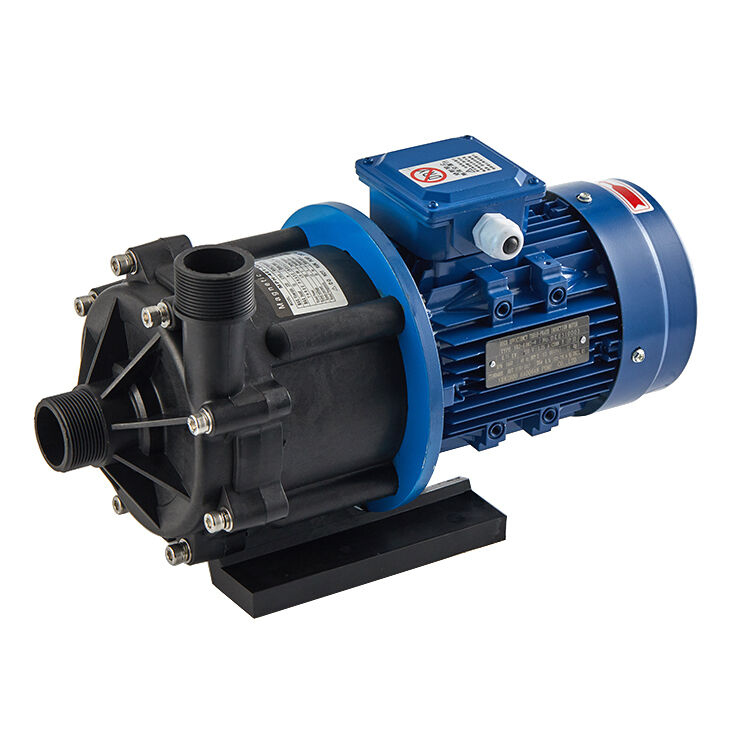
Heavy-duty manufacturing environments demand pumping solutions that can withstand extreme operational conditions while maintaining consistent performance and energy efficiency. When choosing between an industrial pump and a standard pump, understanding the technical differences, efficiency metrics, and application-specific advantages becomes critical for production continuity and cost management. This article examines the core distinctions between these pump categories and clarifies which type delivers superior efficiency in demanding manufacturing contexts where reliability, flow capacity, and operational longevity determine competitive advantage.
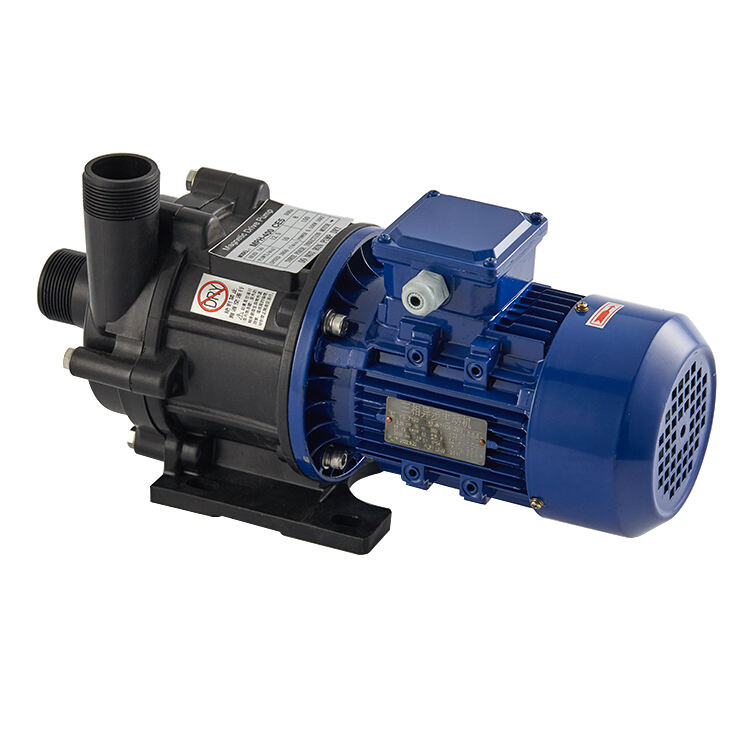
The decision between standard and industrial-grade pumping equipment involves evaluating construction quality, hydraulic efficiency, duty cycle capabilities, and total cost of ownership over the equipment lifecycle. While standard pumps serve lighter applications adequately, manufacturing operations involving corrosive chemicals, high temperatures, abrasive slurries, or continuous 24/7 operation require the enhanced engineering that characterizes purpose-built industrial pumping systems. The efficiency question extends beyond simple energy consumption to encompass uptime reliability, maintenance frequency, and process consistency under variable load conditions.
Engineering Differences That Define Pump Categories
Structural Design and Material Selection
The fundamental distinction between an industrial pump and a standard pump begins with material engineering and construction robustness. Standard pumps typically utilize cast iron housings, standard seal materials, and components designed for intermittent duty cycles in controlled environments. These units serve residential, light commercial, and non-critical applications where operating conditions remain stable and failure consequences are manageable. In contrast, industrial pump designs incorporate specialized alloys, hardened shafts, reinforced casings, and advanced sealing systems engineered to resist chemical attack, thermal expansion, and mechanical stress from continuous operation.
Material selection directly impacts operational efficiency in heavy-duty manufacturing because component degradation reduces hydraulic performance over time. Industrial pumps employ materials such as stainless steel alloys, duplex steel, bronze, or engineered polymers selected based on fluid compatibility and process requirements. The superior corrosion resistance and mechanical strength of these materials maintain internal clearances and surface finishes that preserve volumetric efficiency throughout extended service intervals. Standard pumps using commodity materials experience accelerated wear in aggressive media, leading to increased internal leakage, reduced flow rates, and declining efficiency that compromises manufacturing throughput.
Hydraulic Design Optimization
Hydraulic efficiency represents a critical performance differentiator between pump categories. An industrial pump features impeller geometries, volute designs, and internal flow passages engineered through computational fluid dynamics to minimize turbulence, reduce friction losses, and maximize energy transfer from motor to fluid. These design refinements translate to higher wire-to-water efficiency, meaning more of the input electrical energy converts to useful hydraulic work rather than dissipating as heat or vibration.
Standard pumps utilize simplified hydraulic designs optimized for manufacturing cost rather than peak efficiency, which suffices for applications with modest performance requirements. However, heavy-duty manufacturing processes demand consistent flow rates and pressures regardless of system variations or fluid property changes. Industrial pump hydraulic designs accommodate wider operating envelopes while maintaining efficiency across the performance curve, whereas standard pumps exhibit sharp efficiency drops when operating away from their narrow best efficiency point. This broader efficiency range enables industrial pumps to deliver consistent performance despite process variations common in chemical processing, refining, and materials handling operations.
Motor Integration and Drive Systems
The motor and drive components integrated with pumping elements significantly influence overall system efficiency. Industrial pumps typically pair with premium efficiency motors rated for continuous duty, featuring thermal protection, vibration-resistant construction, and insulation systems suitable for harsh environments. Variable frequency drives commonly accompany industrial pump installations, enabling precise flow control while reducing energy consumption during partial load operation. This integration allows manufacturing facilities to match pump output to instantaneous process demands rather than operating continuously at full capacity with flow throttling that wastes energy.
Standard pumps generally ship with standard efficiency motors designed for periodic operation, lacking the thermal capacity and bearing durability required for continuous manufacturing duty cycles. The absence of sophisticated drive controls means these units operate at fixed speeds regardless of actual flow requirements, leading to energy waste through bypass recirculation or throttle valve pressure drops. For heavy-duty manufacturing where pumps may operate thousands of hours annually, the efficiency advantage of properly integrated industrial pump systems compounds into substantial energy savings and reduced operating costs that justify the higher initial investment.
Performance Characteristics in Manufacturing Environments
Continuous Duty Capability and Reliability
Manufacturing efficiency depends fundamentally on equipment uptime and process continuity. Industrial pumps are engineered for 24/7 continuous operation with mean time between failures measured in years rather than months. The robust bearing systems, thermal management provisions, and mechanical seal technologies employed in industrial pump designs prevent premature failures that disrupt production schedules. Heavy-duty bearings with adequate load ratings, proper lubrication systems, and vibration isolation ensure smooth operation throughout extended run periods without performance degradation.
Standard pumps designed for intermittent duty cycles experience accelerated wear and increased failure rates when subjected to continuous manufacturing operation. Bearing fatigue, seal deterioration, and thermal stress cause unexpected shutdowns that halt production lines and generate costly emergency maintenance interventions. The reliability differential between pump categories becomes particularly pronounced in critical process applications where pump failure immediately impacts product quality or safety systems. An industrial pump properly selected for the application delivers predictable service life with scheduled maintenance windows that align with planned production shutdowns rather than forcing unplanned downtime.
Flow Capacity and Pressure Stability
Heavy-duty manufacturing processes require consistent flow delivery regardless of system pressure variations or fluid property changes. Industrial pumps maintain stable performance across wider operating ranges through superior hydraulic design and structural rigidity that prevents internal clearance changes under load. The ability to deliver rated flow at design pressure even as system conditions fluctuate ensures process consistency critical for quality control in chemical reactions, cooling systems, and materials transport applications.
Standard pumps exhibit greater sensitivity to system variations, with flow rates declining significantly as discharge pressure increases or fluid viscosity changes. This performance instability forces manufacturing operators to oversize equipment or accept suboptimal process conditions that reduce overall production efficiency. The flow stability advantage of industrial pumps becomes especially valuable in batch processing operations where fluid properties vary throughout production cycles, or in systems with dynamic head requirements due to changing tank levels or multiple discharge points operating intermittently.
Temperature and Viscosity Handling
Manufacturing processes frequently involve fluids at elevated temperatures or with viscosities significantly higher than water. Industrial pump designs accommodate these challenging conditions through materials that maintain strength at temperature, sealing systems compatible with thermal expansion, and hydraulic geometries that handle viscous fluids without excessive power consumption. Clearances between rotating and stationary components are engineered to prevent contact at operating temperature while minimizing internal slip that reduces volumetric efficiency.
Standard pumps designed for ambient water service experience rapid performance deterioration when handling hot fluids or viscous media. Thermal expansion can cause rotor-to-casing contact and catastrophic failure, while inadequate hydraulic design for viscous flow results in cavitation, vibration, and dramatically reduced efficiency. An industrial pump specified for high-temperature or viscous service maintains efficiency and reliability under these demanding conditions, enabling manufacturers to optimize process parameters for product quality rather than limiting operations to accommodate equipment constraints.
Efficiency Measurement and Total Cost Analysis
Wire-to-Water Efficiency Metrics
True efficiency comparison between pump types requires examining the complete energy conversion chain from electrical input to useful hydraulic output. Industrial pumps typically achieve wire-to-water efficiencies between seventy and eighty-five percent in their optimal operating range, with premium designs exceeding these values. This efficiency reflects the cumulative effect of hydraulic design optimization, mechanical friction reduction, and motor-drive integration. Each percentage point of efficiency improvement translates directly to reduced electrical consumption, which compounds into substantial cost savings for pumps operating continuously in manufacturing facilities.
Standard pumps generally deliver wire-to-water efficiencies in the fifty to sixty-five percent range, with significant drops outside narrow optimal conditions. The twenty to thirty percentage point efficiency disadvantage means standard pumps consume substantially more electricity to deliver equivalent hydraulic work. For heavy-duty manufacturing applications with annual operating hours exceeding six thousand, the additional energy cost of lower-efficiency equipment quickly exceeds the initial price differential between pump categories. When manufacturers conduct proper lifecycle cost analysis including energy consumption projections, industrial pump solutions consistently demonstrate superior economic value despite higher purchase prices.
Maintenance Frequency and Lifecycle Costs
Equipment efficiency extends beyond energy consumption to encompass maintenance requirements and component replacement intervals. Industrial pumps feature serviceable designs with readily accessible wear parts, standardized components, and documentation supporting efficient maintenance procedures. The robust construction and proper material selection extend service intervals, reducing maintenance labor hours and spare parts consumption over the equipment lifecycle. Predictable wear patterns enable condition-based maintenance strategies that optimize part replacement timing and prevent catastrophic failures.
Standard pumps require more frequent maintenance interventions due to accelerated wear rates when operated in demanding manufacturing environments. Component failures often occur unpredictably, forcing reactive maintenance that costs substantially more than planned service activities. The indirect costs of unplanned downtime, emergency parts procurement, and production losses further increase total ownership costs of standard pump installations in heavy-duty applications. When manufacturers properly account for these lifecycle cost factors, the efficiency advantage of industrial pumps becomes even more pronounced, typically delivering return on investment within two to four years through combined energy savings and reduced maintenance burden.
Process Efficiency Impact
Pump performance directly influences overall manufacturing process efficiency beyond the equipment itself. Consistent flow delivery and pressure stability from industrial pumps enable tighter process control, reducing product quality variations and minimizing off-specification production that requires reprocessing or disposal. The ability to maintain design conditions throughout production runs optimizes chemical reactions, heat transfer processes, and materials handling operations, improving yield rates and throughput per unit time.
Standard pumps with unstable performance characteristics force manufacturing operators to build safety margins into process parameters, operating further from optimal conditions to prevent quality failures from flow or pressure variations. These conservative operating strategies reduce overall process efficiency even if pump energy consumption appears acceptable in isolation. The system-level efficiency gains from reliable industrial pump performance often exceed the direct equipment efficiency improvements, making the total economic impact substantially greater than simple energy calculations suggest.
Application-Specific Selection Criteria
Chemical Processing and Corrosive Media
Chemical manufacturing environments present extreme challenges requiring specialized industrial pump designs. Corrosive acids, caustic solutions, and reactive chemicals rapidly degrade standard pump materials, causing leaks, contamination, and safety hazards. Industrial pumps engineered for chemical service utilize materials such as Hastelloy, titanium, or fluoropolymer linings that resist chemical attack while maintaining mechanical integrity. Sealless magnetic drive designs eliminate shaft penetrations that represent potential leak paths, enhancing safety and environmental compliance in hazardous material handling.
The superior chemical resistance of industrial pump construction maintains efficiency throughout the service life by preventing internal corrosion that increases clearances and reduces volumetric efficiency. Standard pumps in chemical applications experience rapid performance degradation as corrosion roughens internal surfaces, increases friction losses, and allows internal leakage between pressure and suction regions. For chemical manufacturers where product purity and process safety are paramount, the reliability and efficiency advantages of properly specified industrial pumps far outweigh cost considerations, making standard pumps unsuitable for these demanding applications.
High-Temperature and Thermal Cycling Applications
Manufacturing processes involving elevated temperatures or thermal cycling require industrial pump designs that accommodate thermal expansion while maintaining performance. Hot oil circulation systems, heat transfer fluid loops, and steam condensate return applications subject pumps to sustained high temperatures that exceed standard pump design limits. Industrial pumps for high-temperature service feature materials that retain strength at temperature, bearing systems with adequate thermal capacity, and sealing arrangements that function reliably despite thermal expansion effects.
Standard pumps lack the thermal design provisions necessary for reliable high-temperature operation, experiencing seal failures, bearing damage, and loss of internal clearance control when exposed to sustained elevated temperatures. The efficiency and reliability advantages of industrial pumps in thermal applications become critical for manufacturing operations where temperature control directly impacts product quality or energy recovery efficiency. Facilities using industrial pumps in these applications achieve consistent performance and avoid the frequent failures that plague standard pump installations attempting to operate beyond their design envelope.
Abrasive Slurries and Solids Handling
Mining, mineral processing, and wastewater treatment applications involve fluids containing abrasive particles that rapidly erode standard pump components. Industrial pumps designed for slurry service incorporate hardened materials, wear-resistant coatings, and hydraulic designs that minimize particle impingement on critical surfaces. Replaceable wear components enable economical maintenance while protecting the pump casing and structural elements from abrasive damage. The robust construction maintains hydraulic efficiency longer despite the inherently challenging operating conditions.
Standard pumps experience catastrophic wear rates in abrasive service, with impellers and casings requiring replacement after minimal operating hours. The rapid performance degradation makes standard pumps economically unviable for slurry applications, as replacement frequency and downtime costs far exceed the initial equipment savings. Industrial pumps purpose-built for abrasive service deliver acceptable service life and predictable maintenance costs that enable viable operation in these demanding applications where alternative equipment simply cannot survive long enough to justify installation.
FAQ
What is the primary efficiency advantage of industrial pumps over standard pumps in manufacturing?
Industrial pumps deliver higher wire-to-water efficiency through optimized hydraulic design, superior materials, and motor integration, typically achieving seventy to eighty-five percent efficiency compared to fifty to sixty-five percent for standard pumps. This efficiency advantage compounds over thousands of annual operating hours into substantial energy cost savings. Beyond energy efficiency, industrial pumps maintain consistent performance under varying conditions and throughout extended service intervals, delivering process stability that improves overall manufacturing efficiency beyond the pump itself.
Can standard pumps ever be more cost-effective than industrial pumps for manufacturing applications?
Standard pumps may appear cost-effective in non-critical, intermittent-duty applications with clean fluids at ambient temperature where failure consequences are minimal. However, for continuous heavy-duty manufacturing operation, the lifecycle costs of standard pumps including higher energy consumption, frequent maintenance, unplanned downtime, and shorter service life typically exceed industrial pump total ownership costs within two to four years. Proper economic analysis accounting for energy, maintenance, and downtime costs consistently favors industrial pumps in demanding manufacturing environments despite higher initial purchase prices.
How do material choices in industrial pumps contribute to operational efficiency?
Industrial pump materials such as stainless steel alloys, hardened shafts, and engineered sealing systems resist corrosion, wear, and thermal degradation that compromise efficiency over time. Superior materials maintain internal clearances and surface finishes that preserve volumetric efficiency throughout extended service, preventing the internal leakage and increased friction losses that reduce standard pump performance as components degrade. Material durability also extends maintenance intervals and component life, reducing downtime and lifecycle costs that factor into total operational efficiency.
What role does variable frequency drive integration play in industrial pump efficiency?
Variable frequency drives enable industrial pumps to match output precisely to instantaneous process demands rather than operating continuously at full speed with flow throttling. This capability reduces energy consumption during partial load operation, which represents the majority of operating time in many manufacturing processes. Drive integration also provides soft-start capabilities that reduce mechanical stress, extends equipment life, and enables sophisticated control strategies that optimize process efficiency beyond simple pump operation. The combination of efficient pump hydraulics and intelligent drive control maximizes system-level efficiency in ways impossible with fixed-speed standard pump installations.
Table of Contents
- Engineering Differences That Define Pump Categories
- Performance Characteristics in Manufacturing Environments
- Efficiency Measurement and Total Cost Analysis
- Application-Specific Selection Criteria
-
FAQ
- What is the primary efficiency advantage of industrial pumps over standard pumps in manufacturing?
- Can standard pumps ever be more cost-effective than industrial pumps for manufacturing applications?
- How do material choices in industrial pumps contribute to operational efficiency?
- What role does variable frequency drive integration play in industrial pump efficiency?