
 EN
EN
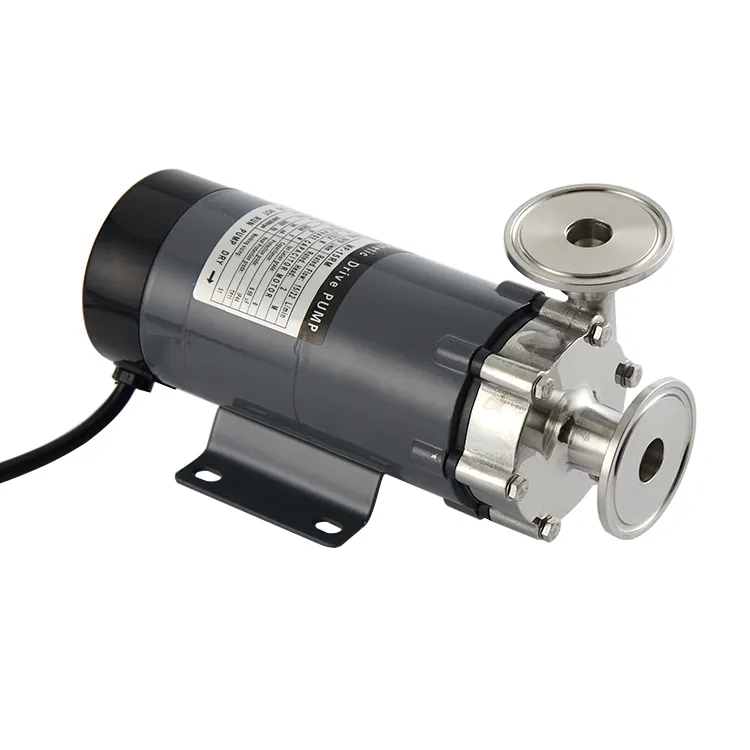
Selecting the appropriate wort pump for your craft brewery is a critical decision that directly impacts your production efficiency, product quality, and long-term operational costs. A wort pump serves as the workhorse of your brewing system, transferring hot wort between vessels, circulating liquid during mashing, and maintaining consistent flow throughout your process. With numerous pump technologies, materials, and specifications available, craft brewers must understand the technical distinctions and practical implications of their choices to avoid costly mistakes and ensure reliable performance in demanding brewing environments.
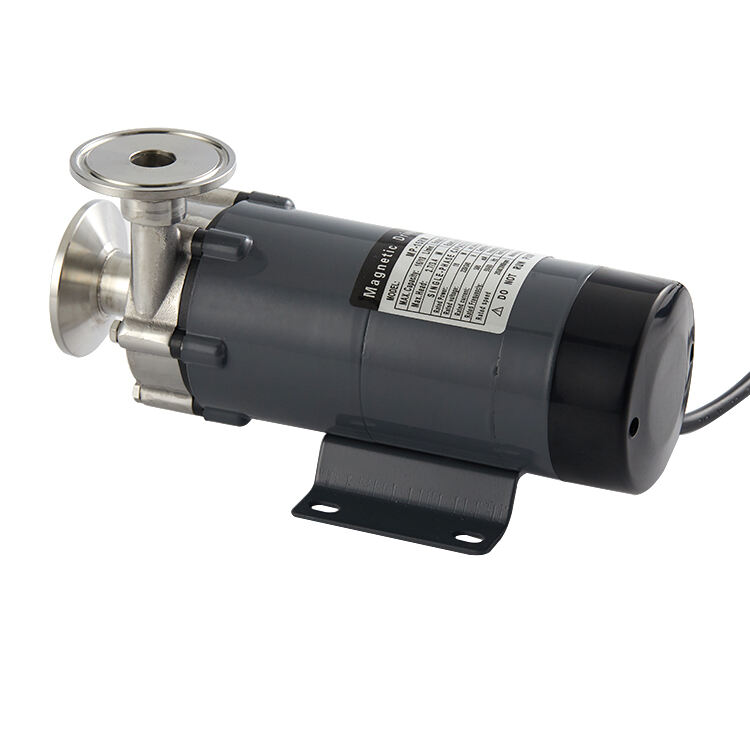
The decision between magnetic drive and mechanical seal pumps, combined with considerations of flow rate capacity and construction materials, forms the foundation of selecting a wort pump that matches your brewery's scale, process requirements, and hygiene standards. This comprehensive guide examines the critical factors that determine pump suitability, providing practical selection criteria based on real-world brewing applications. Whether you're establishing a new brewery or upgrading existing equipment, understanding these technical parameters will help you invest in a wort pump that delivers consistent performance while minimizing maintenance demands and protecting your product integrity throughout the brewing process.
Understanding Magnetic Drive versus Mechanical Seal Wort Pump Technologies
Fundamental Operating Principles of Magnetic Drive Pumps
Magnetic drive wort pumps utilize a revolutionary sealless design where the motor's magnetic field passes through a containment shell to drive the impeller without any direct mechanical connection. This configuration eliminates the traditional shaft seal entirely, creating a hermetically sealed pumping chamber that prevents any possibility of external contamination or leakage. The magnetic coupling consists of an outer drive magnet connected to the motor and an inner driven magnet attached to the impeller, with a non-magnetic barrier separating them while allowing magnetic force transmission.
This sealless architecture provides exceptional advantages for craft breweries handling hot wort at temperatures reaching 100°C or higher. Without dynamic seals that can wear, degrade, or fail under thermal stress, magnetic drive pumps maintain complete containment throughout their service life. The absence of a mechanical seal also eliminates the need for seal lubrication, cooling water systems, or periodic seal replacement, significantly reducing maintenance requirements and operational complexity in busy brewing environments.
The design inherently supports superior sanitary standards because there are no crevices, packing glands, or seal cavities where wort residue can accumulate or harbor bacterial growth. This makes magnetic drive technology particularly well-suited for applications where product purity is paramount and cleaning efficiency directly impacts batch turnaround time. The smooth, uninterrupted flow path through a wort pump with magnetic drive technology ensures minimal shear stress on wort components while maintaining consistent hydraulic performance across varying viscosity conditions.
Mechanical Seal Pump Construction and Performance Characteristics
Mechanical seal wort pumps employ a traditional shaft design where a rotating seal assembly creates a barrier between the pumping chamber and the external environment. This seal consists of two precision-lapped faces—one stationary and one rotating—pressed together by spring force and hydraulic pressure to prevent leakage along the shaft. The seal faces are typically manufactured from ceramic, silicon carbide, or tungsten carbide materials selected for their hardness, thermal stability, and resistance to chemical attack from wort constituents.
The mechanical seal configuration offers advantages in high-pressure applications and situations requiring maximum flow efficiency, as the direct shaft connection between motor and impeller eliminates the power transmission losses inherent in magnetic coupling systems. This direct drive approach enables mechanical seal pumps to achieve slightly higher hydraulic efficiency ratings, particularly in larger capacity units where the energy savings can become economically significant over extended operating periods.
However, mechanical seals introduce maintenance considerations that craft brewers must accommodate in their operational planning. The seal faces require adequate lubrication from the pumped liquid, meaning the wort pump must maintain minimum flow conditions to prevent dry running and premature seal failure. Temperature cycling during brewing operations causes thermal expansion and contraction of seal components, gradually wearing the lapped faces and eventually requiring seal replacement as part of routine maintenance schedules.
Comparative Analysis for Craft Brewery Applications
When evaluating wort pump technologies for craft brewery service, the operational environment and process requirements strongly favor magnetic drive designs for most applications. The high-temperature conditions typical of wort transfer, combined with frequent cleaning-in-place cycles using caustic and acidic chemicals, create demanding conditions that accelerate mechanical seal wear and increase the risk of unexpected seal failure during production runs.
Magnetic drive pumps eliminate the seal failure mode entirely, providing inherent reliability advantages that translate to reduced downtime and greater production consistency. The sealed design also protects operators from potential exposure to hot wort in the event of pump issues, enhancing workplace safety in busy brewery environments. Additionally, the simplified maintenance profile of magnetic drive units allows smaller brewery teams to manage equipment servicing without requiring specialized seal replacement expertise or maintaining seal component inventory.
The initial capital cost difference between magnetic drive and mechanical seal wort pumps has narrowed considerably as magnetic drive technology has matured and production volumes have increased. When lifecycle costs including seal replacement, downtime, and maintenance labor are factored into the economic comparison, magnetic drive pumps often demonstrate superior total cost of ownership despite potentially higher upfront equipment prices. This economic advantage becomes more pronounced in breweries operating multiple shifts or running frequent production cycles where pump reliability directly impacts throughput capacity.
Determining Appropriate Flow Rate Specifications for Your Brewing Process
Calculating System Flow Requirements Based on Vessel Volumes
Proper wort pump sizing begins with accurately determining the volumetric flow rates required for each transfer operation in your brewing process. The primary consideration is your batch size and the desired transfer time between vessels, which together define the minimum flow capacity your pump must deliver. For example, transferring a 10-barrel batch in 15 minutes requires a minimum flow rate of approximately 40 gallons per minute, though brewers typically specify pumps with 20-30% additional capacity to account for system resistance and maintain reasonable transfer times.
Beyond simple vessel-to-vessel transfers, craft brewers must consider the flow requirements for recirculation operations during mashing and whirlpool phases. Mash recirculation typically requires gentler flow rates—often 30-50% of the transfer flow capacity—to avoid compacting the grain bed while maintaining effective filtration and temperature distribution. The wort pump must provide stable, controllable flow across this range without cavitation or excessive shear that could extract undesirable compounds from grain husks.
System piping configuration significantly impacts the effective flow capacity a pump can deliver in actual installation. Vertical lift distances, pipe length, fitting quantities, and pipe diameter all contribute to system resistance that reduces the flow rate below the pump's rated open-discharge capacity. Brewers should calculate total dynamic head requirements considering both static lift and friction losses to ensure the selected wort pump operates in its optimal efficiency range under real-world conditions rather than relying solely on maximum flow specifications.
Understanding Pump Performance Curves and Operating Points
Every wort pump operates along a characteristic performance curve that relates flow rate to discharge pressure, with maximum flow occurring at zero backpressure and maximum pressure occurring at zero flow. The optimal operating point for any pump falls in the middle region of this curve where efficiency is highest and mechanical stress is minimized. Selecting a pump that operates near the extreme ends of its performance curve leads to reduced efficiency, increased wear, and potential reliability issues over time.
Craft brewers should review manufacturer-provided pump curves to verify that their calculated system requirements fall within the pump's efficient operating range, typically defined as the region where efficiency exceeds 50% of the maximum value. Operating significantly to the right of the best efficiency point on the curve—running at higher flow rates with minimal backpressure—can cause cavitation issues and excessive wear on impeller components. Conversely, operating too far left—against high backpressure with restricted flow—generates excessive heat and places unnecessary stress on motor bearings and magnetic couplings.
Variable frequency drives offer valuable flexibility for breweries using a single wort pump for multiple applications with different flow requirements. By adjusting motor speed electronically, VFD-equipped pumps can shift their performance curve to match varying process needs while maintaining operation near optimal efficiency points. This capability proves particularly valuable for smaller breweries where equipment versatility helps justify capital investment while accommodating future production expansion without requiring complete pump replacement.
Accounting for Hot Wort Properties and Temperature Effects
The physical properties of wort change significantly with temperature, directly impacting pump performance and flow behavior throughout the brewing process. Hot wort near boiling temperatures exhibits substantially lower viscosity compared to cooled wort, affecting both the flow resistance through piping systems and the pump's net positive suction head requirements. A wort pump must maintain adequate suction performance to avoid cavitation when handling near-boiling liquid, which has reduced available NPSH compared to cooler fluids due to higher vapor pressure.
Temperature variations also affect the density and specific gravity of wort, with high-gravity worts requiring greater pumping energy to achieve equivalent flow rates compared to standard-gravity batches. Breweries producing a range of beer styles with varying original gravities should size their wort pump capacity based on the highest-gravity products they intend to produce, ensuring adequate flow performance across their entire product portfolio rather than optimizing only for average conditions.
The thermal expansion characteristics of wort pump materials become relevant during heat-up and cool-down cycles, particularly in pumps with tight clearances between rotating and stationary components. Quality pumps designed specifically for brewing service incorporate appropriate thermal expansion allowances to prevent binding or excessive clearance variation across the operating temperature range. Brewers should verify that specified wort pump models are rated for continuous operation at their maximum process temperatures, not merely capable of surviving brief exposure to hot liquids.
Material Selection Criteria for Sanitary Brewing Service
Stainless Steel Grades and Their Brewing Suitability
The construction material of a wort pump fundamentally determines its compatibility with brewing environments, resistance to corrosion from wort constituents and cleaning chemicals, and ability to maintain sanitary conditions over extended service life. Type 304 stainless steel represents the baseline standard for food-grade brewing equipment, offering good corrosion resistance to mildly acidic wort at typical pH levels between 5.0 and 6.0. This austenitic alloy contains approximately 18% chromium and 8% nickel, creating a passive oxide layer that protects against oxidation while providing adequate resistance to the organic acids naturally present in wort.
For breweries utilizing aggressive cleaning protocols involving chloride-containing sanitizers or operating in coastal environments with elevated atmospheric chloride exposure, Type 316 stainless steel offers enhanced corrosion resistance through the addition of 2-3% molybdenum to the alloy composition. This molybdenum content significantly improves resistance to pitting corrosion and crevice corrosion in chloride-rich environments, extending equipment service life and reducing the risk of contamination from corroded metal surfaces. The incremental cost of 316 stainless construction typically represents a worthwhile investment for breweries prioritizing equipment longevity and maximum sanitary protection.
Surface finish quality deserves careful attention when evaluating wort pump construction, as rougher finishes provide more surface area for bacterial attachment and create cleaning challenges that compromise sanitation effectiveness. Pumps intended for brewing service should feature internal surfaces with Ra values of 0.8 micrometers or smoother, achieved through electropolishing or mechanical polishing processes that remove surface irregularities and enhance the protective oxide layer. This smooth finish not only improves cleanability but also reduces friction losses, slightly improving hydraulic efficiency while minimizing the shear stress applied to wort components during pumping operations.
Seal and Gasket Material Compatibility
Even in magnetic drive pumps without mechanical seals, various elastomeric components serve as static seals between pump sections and provide containment for the pumped fluid. These gasket materials must withstand repeated thermal cycling between ambient temperatures and wort temperatures exceeding 100°C while maintaining seal integrity and avoiding chemical degradation from both wort constituents and cleaning chemicals. Ethylene propylene diene monomer rubber represents the standard gasket material for brewing applications, offering excellent heat resistance up to 150°C and good compatibility with both acidic wort and alkaline cleaning solutions.
Food-grade silicone gaskets provide an alternative for applications requiring maximum temperature resistance or superior flexibility across wide temperature ranges. Silicone maintains sealing effectiveness at both cryogenic temperatures and continuous service up to 200°C, accommodating the thermal stress experienced during aggressive cleaning cycles involving high-temperature caustic solutions. However, silicone exhibits lower tear strength compared to EPDM, requiring more careful handling during pump disassembly and reassembly for maintenance or inspection.
Fluoroelastomer gaskets such as Viton offer the ultimate chemical resistance for breweries employing particularly aggressive sanitizing protocols or handling specialty ingredients that might attack conventional elastomers. While significantly more expensive than EPDM or silicone, fluoroelastomers provide peace of mind in critical applications where gasket failure could result in product loss or contamination. Brewers should verify that all elastomeric components in their wort pump are specifically FDA-approved for food contact and rated for the maximum temperatures and chemical exposures expected in their specific operating environment.
Sanitary Connection Standards and Hygienic Design Principles
Modern craft breweries overwhelmingly favor Tri-Clamp sanitary fittings for all process connections, including wort pump inlet and outlet ports. These standardized fittings use a circular gasket compressed between two flanged pipe ends by an external clamp, creating a reliable seal that can be quickly disconnected for cleaning, inspection, or equipment reconfiguration. A proper brewing wort pump should feature Tri-Clamp connections sized appropriately for the expected flow rates—typically 1.5-inch for smaller systems and 2-inch or larger for production breweries—rather than threaded connections that create crevices where residue can accumulate.
The overall hygienic design of the pump assembly significantly impacts cleaning effectiveness and sanitation reliability. Self-draining orientation prevents liquid retention in the pump cavity after transfer operations, eliminating standing wort that could serve as a bacterial growth medium between batches. All internal surfaces should be continuously sloped toward drain points without horizontal ledges, pockets, or dead zones that resist drainage and create cleaning challenges. Quality wort pump designs incorporate these hygienic principles throughout their construction rather than treating sanitation as an afterthought.
The ease of disassembly for inspection and thorough cleaning represents another critical material and design consideration. Pumps intended for brewing service should allow complete disassembly without special tools, enabling brewers to visually inspect all product-contact surfaces and manually clean areas that automated CIP systems might not adequately address. Stainless steel fasteners with appropriate thread engagement and anti-seize provisions ensure that pumps can be repeatedly disassembled and reassembled without damaging threads or requiring replacement hardware, supporting sustainable maintenance practices over the equipment's service life.
Practical Integration Considerations for Brewery Systems
Electrical Requirements and Motor Configuration Options
Electrical infrastructure compatibility represents a fundamental but sometimes overlooked consideration when selecting a wort pump for craft brewery installation. Most smaller breweries operate on single-phase power supplies with either 110V or 220V service, while larger production facilities typically have three-phase power available that offers advantages for motor efficiency and performance. The wort pump motor must match your available electrical service, as retrofitting electrical infrastructure to accommodate incompatible equipment adds significant cost and complexity to installation projects.
Single-phase motors in the fractional to 2-horsepower range adequately serve most small-scale brewing operations, providing sufficient power for typical wort transfer and recirculation duties while drawing reasonable current loads that existing electrical circuits can support. These motors typically include thermal overload protection to prevent damage from sustained overcurrent conditions, though brewers should ensure their electrical installation includes appropriate circuit breakers and ground fault protection for safe operation in wet environments typical of brewery production floors.
Three-phase motors deliver smoother operation with reduced vibration and electrical noise compared to single-phase designs, while typically offering better efficiency and longer service life due to more balanced electromagnetic forces within the motor structure. Breweries with three-phase power available should strongly consider specifying three-phase motors for their wort pump installations, particularly for larger units where the efficiency advantages translate to meaningful energy savings over the equipment's operational lifetime. Variable frequency drive compatibility represents an additional electrical consideration, as not all motor designs perform reliably under VFD control without derating or experiencing premature insulation failure.
Installation Position and Suction-Side Considerations
The physical installation location of a wort pump relative to the vessels it services significantly impacts reliability and performance, particularly regarding suction conditions and net positive suction head available to the pump. Centrifugal pumps—the type most commonly used for brewing wort transfer—cannot create suction lift and require positive pressure at their inlet to function reliably without cavitation. Ideally, the pump should be installed below the lowest liquid level in the source vessel, creating a flooded suction condition that ensures adequate NPSH even with hot, near-boiling wort.
When physical constraints prevent flooded suction installation, brewers must carefully evaluate whether adequate NPSH exists at the pump inlet under worst-case conditions of maximum temperature, minimum liquid level, and maximum flow rate. Insufficient NPSH causes cavitation—the formation and collapse of vapor bubbles within the pump—which creates characteristic rattling noise, causes vibration, reduces flow capacity, and damages impeller surfaces through repetitive implosion impacts. A wort pump experiencing regular cavitation will exhibit accelerated wear and premature failure regardless of material quality or construction standards.
Suction piping design directly affects the NPSH available at the pump inlet and should follow established best practices to minimize friction losses and avoid air entrainment. The suction line should be as short as practical with minimal bends, using a pipe diameter at least equal to the pump inlet size to keep fluid velocity below recommended limits. Any reducers should be eccentric rather than concentric to prevent air pocket formation at high points in the piping, and the piping should slope continuously upward toward the pump without high points where air can accumulate and block flow.
Control Integration and Automation Capabilities
Modern craft breweries increasingly incorporate automation and process control systems to improve consistency, efficiency, and traceability in their brewing operations. The wort pump serves as a critical actuator within these control systems, requiring appropriate integration capabilities to respond to automated commands and provide feedback to the control platform. At minimum, the pump should accept remote start-stop signals from the brewery's control system, eliminating the need for operators to manually activate pumps at the equipment location during transfers.
Flow measurement integration enables more sophisticated control strategies including volumetric transfer control where the pump automatically stops after delivering a preset volume to the destination vessel. In-line flow meters with pulse or analog outputs feed data to the control system, which calculates accumulated volume and controls pump operation accordingly. This capability improves transfer accuracy, reduces operator attention requirements, and supports recipe documentation by automatically recording actual volumes transferred during each brewing operation.
Variable speed control through VFD integration represents the most advanced control approach, enabling the brewing system to dynamically adjust wort pump flow rates based on process requirements. During mash recirculation, the control system might gradually increase pump speed as the grain bed sets and resistance decreases, maintaining target flow velocity through the grain bed for optimal extraction. During transfers, controlled acceleration and deceleration ramps reduce water hammer effects and minimize foaming or splashing that could introduce excessive oxygen into the wort.
FAQ
What is the typical service life of a magnetic drive wort pump in craft brewery service?
A quality magnetic drive wort pump properly maintained in craft brewery service typically delivers 5-10 years of reliable operation before requiring major component replacement. The sealless design eliminates the most common failure mode found in mechanical seal pumps, significantly extending service intervals. Primary wear occurs in the bearings supporting the impeller shaft and potentially in the magnetic coupling if the pump experiences frequent dry running or operation beyond design temperature limits. Regular inspection of bearing condition, verification that the pump operates within its rated flow and pressure range, and strict adherence to minimum flow requirements to prevent overheating extend service life toward the upper end of this range. Breweries implementing preventive maintenance programs with annual bearing replacement often achieve even longer operational periods before requiring complete pump replacement.
Can a single wort pump handle all transfer operations in a craft brewery or are multiple pumps necessary?
Most small to medium craft breweries can successfully operate with a single appropriately-sized wort pump for all hot-side transfers and recirculation operations, provided the pump is selected to accommodate the most demanding application in their process. The key requirement is that the pump delivers adequate flow capacity for vessel-to-vessel transfers while also supporting stable, controllable operation at the lower flow rates needed for mash recirculation. Variable frequency drive control significantly enhances the versatility of a single pump installation by enabling flow rate adjustment across a wide range without requiring valve throttling that wastes energy and generates heat. Larger production breweries often install dedicated pumps for specific operations such as mash transfer, kettle transfer, and whirlpool recirculation to maximize process flexibility and enable simultaneous operations on multiple brewing lines. The economic decision depends on production volume, batch frequency, and whether process timing constraints require parallel pumping operations.
How does pump selection differ for high-gravity brewing operations?
High-gravity brewing operations producing worts with original gravities exceeding 1.065 require careful attention to pump sizing and performance characteristics due to the increased viscosity and density of concentrated wort solutions. The higher viscosity increases friction losses throughout the piping system, effectively increasing the total dynamic head the pump must overcome to achieve target flow rates. Brewers should calculate system requirements using the properties of their highest-gravity wort rather than standard-gravity assumptions to ensure adequate pump capacity. The increased density also affects net positive suction head requirements, potentially requiring lower pump installation positions or enhanced suction piping to prevent cavitation. Some breweries producing very high-gravity worts above 1.080 specify pumps with 25-35% additional capacity beyond standard calculations to maintain reasonable transfer times and accommodate the challenging fluid properties. Material selection becomes more critical as well, since high-gravity worts contain elevated concentrations of organic acids that accelerate corrosion in marginal-quality stainless steel components.
What maintenance procedures are essential for maximizing wort pump reliability and service life?
Effective wort pump maintenance begins with thorough cleaning after each use, implementing proper CIP procedures that circulate cleaning solutions through the pump at manufacturer-recommended flow rates and temperatures. Visual inspection during routine cleaning should verify that no residue accumulates in pump cavities or around the impeller, as any buildup creates sanitation risks and can accelerate wear on rotating components. Periodic disassembly for deep inspection and manual cleaning—typically quarterly for production breweries—allows verification that bearings show no signs of excessive wear, magnetic couplings remain properly aligned without cracks or chips, and all gaskets maintain appropriate compression without permanent deformation. Bearing replacement represents the primary preventive maintenance task for magnetic drive pumps, typically performed annually or after a specified number of operating hours as recommended by the manufacturer. Maintaining detailed service records tracking operating hours, cleaning cycles, and any performance anomalies enables predictive maintenance approaches that address developing issues before they cause unexpected failures during production.
Table of Contents
- Understanding Magnetic Drive versus Mechanical Seal Wort Pump Technologies
- Determining Appropriate Flow Rate Specifications for Your Brewing Process
- Material Selection Criteria for Sanitary Brewing Service
- Practical Integration Considerations for Brewery Systems
-
FAQ
- What is the typical service life of a magnetic drive wort pump in craft brewery service?
- Can a single wort pump handle all transfer operations in a craft brewery or are multiple pumps necessary?
- How does pump selection differ for high-gravity brewing operations?
- What maintenance procedures are essential for maximizing wort pump reliability and service life?